
Non-Profit (Children) · 7 min read
How can your workplace raise money for childhood cancer and protect family privacy?
You can explain what a childhood cancer charity does without putting a family on display. Here is what to settle before the first invitation goes out.

Start with the charity's work and a direct way to give
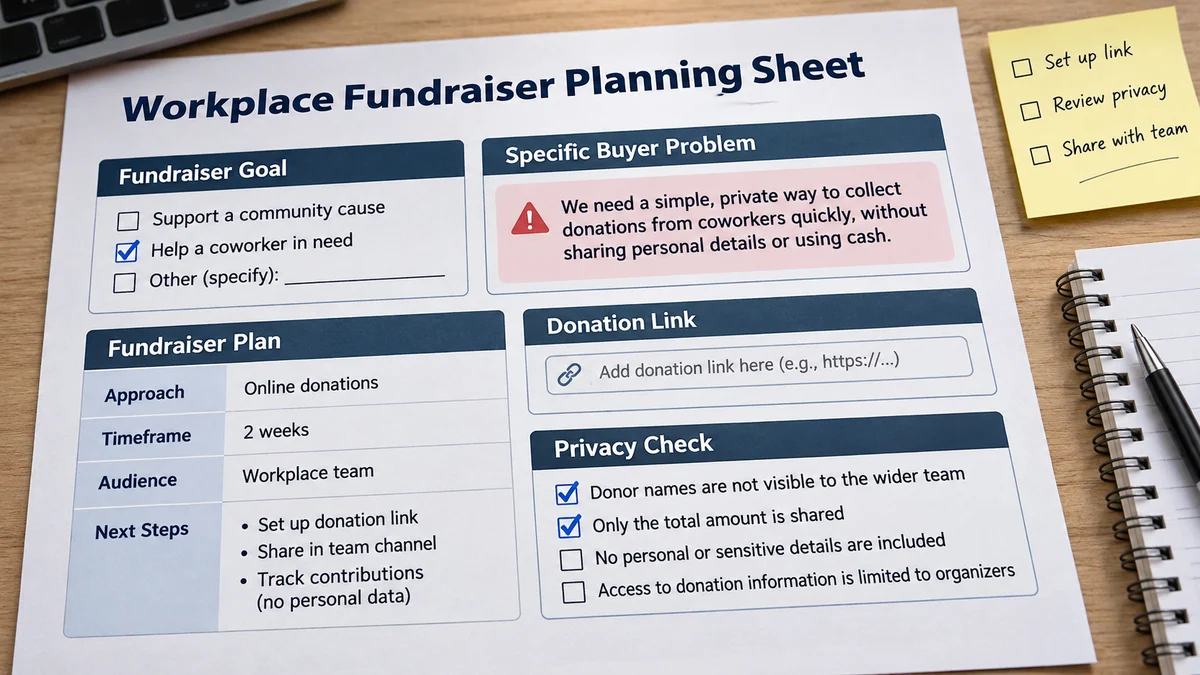
A workplace can raise money for a childhood cancer charity by describing the charity's work in its approved language, linking directly to its donation page, and letting employees choose whether to give. Use images and stories the charity has approved for this particular use, or build the campaign around the work rather than a named child. Before you announce anything, confirm where donations go, what the charity can acknowledge, and what you can share afterward. I would keep the family's role entirely optional.
Think of the invitation an employee sees between meetings. They need to know which organization receives the money, what it does, how to participate, and when the campaign ends. The organization can describe financial assistance, educational resources, or other support without offering private details about any recipient. A Dallas–Fort Worth team can make a clear appeal with the charity's public program information and a confirmed donation link. Let that information do the work.
Choose one promise the campaign can keep
At Leia's Kids, our programs include financial assistance, Royal Deliveries, mental health retreats for adolescents and young adults, advocacy, and educational resources through the Hope Library. Pick a program or mission description that the charity is comfortable sharing and that fits why your workplace wants to get involved. Ask whether donations made through the link support the general work or go to a specific fund. Phrase the appeal to match the answer.
Avoid naming an amount of help a gift will provide unless the charity gives you a current, accurate figure to use. For example, you can explain that the organization helps with needs during childhood cancer without saying that every contribution buys a particular thing. Our guide to when families can ask for financial help covers that program from the family side. When you write for employees, use the organization’s public description or wording it approves for the campaign.
Confirm the channel before you announce anything
Ask the charity which donation page employees should use and whether there is an approved way to associate gifts with your campaign. A direct route can keep payment information and individual gift records with the charity. If your employer wants to collect money and send a combined amount, ask your finance or HR team and the charity to agree on how that will work, including who tracks what was received and how acknowledgments are handled.
Test the invitation link using a device that has never visited the page. Check the organization name and whether a donor can see where their money goes. If an employer match is involved, write down what the company will match, when its payment happens, and how gifts are counted. Keep any match limit or campaign end date close to the link. Donors should be able to understand the offer without asking a coworker what it means.
Write a short invitation people can pass along
I would use a plain headline and a short explanation of why the team picked this cause. Then give the name of the charity, its approved description, the confirmed link, and any participation dates. If people can share the invitation outside the office, make sure it still makes sense on its own. A person seeing it later needs to know whether the link is current and whether any company match still applies.
Put voluntary participation in the design of the campaign. A small team can make it feel as if everyone will know who donated, even if nobody says so. Decide what donation information the workplace actually needs and ask for only that. Use aggregate figures in group announcements when they are available and appropriate. If you want a public thank-you, ask people how they would like to be recognized before sharing their names.
If you are planning a small activity alongside the campaign, think about how someone who cannot attend can still participate. The invitation can include a way to give separately or share the approved information without explaining why they missed the event. Make the same donation route available on the printed sign and the company message, and choose one place for any changes.
Ask us what a team can use before it builds the campaign
If you want to support Leia's Kids from a workplace in North Texas, bring us the campaign format, the dates you are considering, and where the announcement will appear. Tell us whether gifts will go directly to the charity and whether your company intends to match them. Ask which public description, logo, or image can be used in each place. Get that approval while you still have time to change the materials.
If someone brings a family's story to you, take a pause before sharing it. Ask whether the charity can provide an approved alternative, such as a program description or materials already intended for that audience. A family may be comfortable with one kind of conversation and prefer to keep it within that setting. The fundraiser can go ahead using the charity's work as its focus. My guide to giving money, items, or time explains why choosing a form of help the organization can use matters.
Give privacy the same attention you give the donation link
An internal invitation can be forwarded, copied into a slide deck, or posted on a social account. Choose words and images you would be comfortable having reach those audiences. Leave out medical details, school names, locations, and identifying photos unless the charity has explicitly cleared the material for this use and audience. If you are unsure whether a detail could identify a family, omit it and ask the charity for an alternative.
A workplace organizer does not need to collect stories about which employees have a personal connection to cancer. Give people ways to take part without describing their experience. That might mean sharing the approved link, helping prepare the announcement, or making a private gift. If someone volunteers a story, give them time to consider where it would appear and whether they want to share it at all. For a family facing cancer, see our guide to what to say and how to offer help for more about respecting the family's choices.
A group may also want to reuse material from an earlier fundraiser. Confirm the permission again when the audience, platform, or campaign changes. Save the approved version with a note about where it may appear. If someone asks that material be taken down, have a named organizer who can act and contact any partner who received it.
Keep costs and effort in proportion to the event
A simple campaign may need only a message, a tested link, and someone to coordinate the close. If you add a gathering, print materials, or paid promotion, decide who covers those costs and whether any proceeds will be used for them. Confirm how you will describe the arrangement. Ask how the charity wants to handle a contribution tied to sales or a public event before making a claim about the amount it will receive.
A longer project can benefit from one person responsible for donations and another who checks the wording and approvals. A small workplace can assign those roles to one organizer if the process is clear. Keep the approved materials, match terms, and donation route together so the next update does not drift from what was agreed. Our guide to supporting a childhood cancer charity year-round covers ways to build on a successful campaign after it closes.
Send a recap the charity and your coworkers can verify
Before announcing a total, check which gifts are counted and whether the number includes a pending company match. Ask the charity what it can confirm. If individual donations were private or did not have a campaign identifier, say what you can verify rather than estimating a total. A recap can describe participation and thank people for helping even when the workplace does not know every gift.
Keep the recap about the campaign. Name the organization, tell people how to stay involved if they want to, and share only approved information about the work it supports. If you took photos at a company event, check the company's own policy and whether the people pictured agreed to that use. Save the final wording and the verified donation page so another organizer can see exactly what was shared.
If the campaign takes place across several offices, send the same verified recap to each. A short note can explain which parts were shared across the company and which figures apply to one local event. Use the same contact person for corrections.
What to bring when you are ready to plan the fundraiser
Tell me the workplace, the kind of participation you have in mind, the channels you will use, and whether donations will go directly through the charity. Bring any draft invitation or a list of questions you have about matching and acknowledgments. We can discuss current ways to support Leia's Kids and help you identify which program information you can share.
Before you launch, have one person read the invitation as if they know nothing about the organization. They should be able to tell who receives the money, what the charity does, and how to take part privately. If a sentence seems to ask a child or family to provide evidence for your appeal, replace it with a clear description of the program. The campaign can ask people to help while giving families space to make their own choices.
Questions people ask me
Do we need a family's photo for the fundraiser?
No. An approved description of the work and a clear donation link are enough to explain the campaign. Ask the charity before using any image that identifies a family.
Should our workplace collect the gifts?
A direct charity donation page can simplify how gifts and donor information are handled. If your employer wants to combine donations, confirm the process with the charity and the employer's finance team first.
Can we share the individual donation amounts?
Keep individual gifts private unless donors have agreed to that recognition. Ask the charity what campaign total it can confirm without disclosing individual records.
Can we say every donation supports one particular program?
Ask whether the donation route is designated for that program or supports the organization's general work. Use only the description the charity confirms.
Sources
Keep reading
More from Kylie
- How an ordinary person can advocate for childhood cancer research, and actually be heard
- A teenager or young adult with cancer: finding support from people who understand
- The brother or sister of a child with cancer needs help too: what to do
- Your first charity gala: what happens at Hope in the Kingdom, from arrival to last dance
Health and wellbeing
- Chiropractor · Rachel
- Physical Therapy · Brent
- Life Coach · Nader
- Non-Profit (Mental Health) · Chris


