
Videographer/Film Producer · 7 min read
How to film a customer testimonial when the client needs to approve it
A client can tell a useful story without sharing private details. Agree on what they can discuss, who approves the footage, and where each version can run before filming.

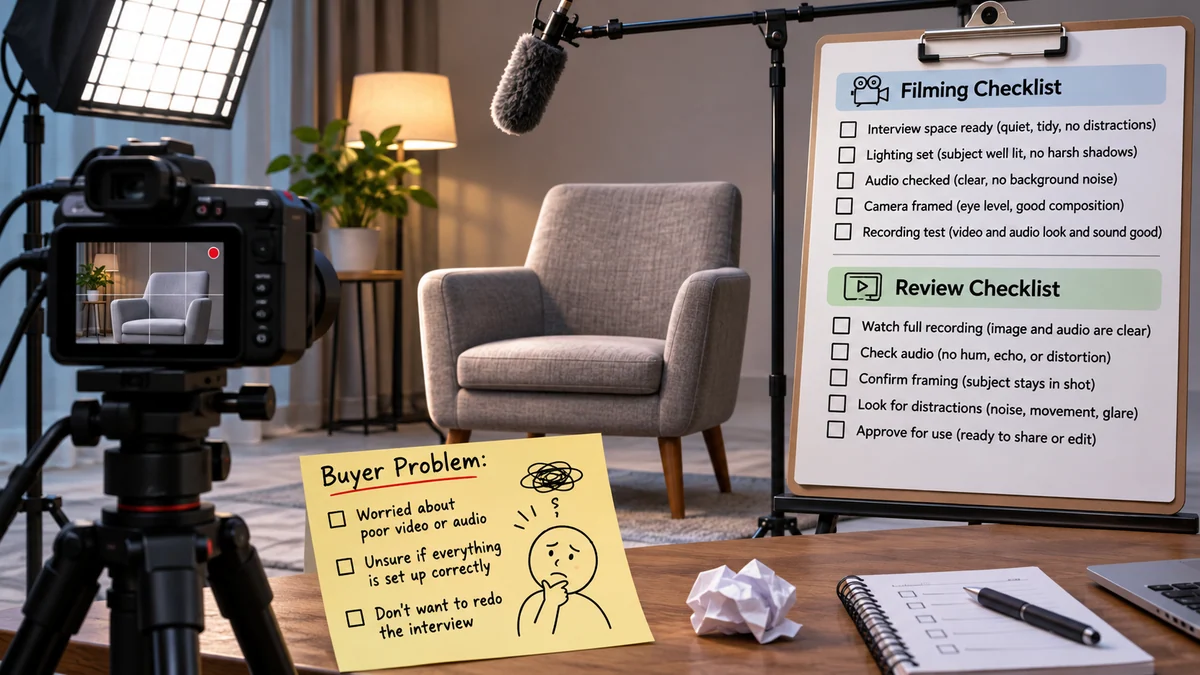
Agree on the public story before you book a crew
Yes, you can film a customer testimonial when the client requires approval or has confidential information to protect. Before production, agree on what the customer can discuss, who can authorize filming and publication, which locations and people can appear, and how the edit will be reviewed. I would build the interview around their real experience and leave sensitive details out of what the camera records.
Imagine a client who can describe a difficult handoff and how your team made it easier, but cannot disclose its vendor list or operating numbers. That can still be a useful story if the viewer can understand the problem and the change. The client needs room to explain what happened in their own words.
At Signature Style Media in Dallas, we work on production from planning through distribution. For a testimonial with approval requirements, I would settle those requirements while the production plan is still flexible. Discovering them after the interview can mean cutting the only explanation that made the story clear.
Identify who can say yes at the client company
Start with the person you want to interview and find out whether they can speak publicly for the business. A spokesperson may have permission to sit for the interview while marketing, legal, or another team has to approve the brand name, footage, or final publication. Ask your client to identify everyone whose approval is needed and what each person reviews.
Put those roles on a short timeline. Someone should be able to confirm the shoot location and approved topics before the crew arrives. Someone else may need to clear the finished edit. Ask how long those decisions take and what the producer should do if feedback does not arrive by the planned date. Give everyone the same dates in writing.
I would confirm what permissions or releases are needed with the client and your legal team. Document the intended uses, including where you expect to run the video and whether shorter versions or excerpts are planned. Send the producer the scope early enough to account for it in the estimate.
If the interviewee leaves the company or changes roles before launch, ask whom you should contact to confirm the existing approval. You may need to update how the person is identified on screen. Keep the contact details with the project so the editor does not have to guess which person can approve that change.
Choose interview questions that work within the boundaries
Ask the customer to describe their situation before working with you, what they looked for, and what they experienced during the work. If they cannot share numbers, let them give a concrete description of what improved. They may be able to explain how a process felt or which part of the job became easier without naming the people or systems involved.
I prefer to send topics for preparation and give the customer the chance to flag subjects that need review. During the interview, leave room for a follow-up that clarifies what they mean. A question such as what made the handoff easier can lead to a usable answer without requiring information they cannot discuss.
The Federal Trade Commission's guidance says endorsements should reflect honest experience and avoid misleading the audience. It also discusses disclosures when an unexpected material connection might affect how people weigh the endorsement. Ask the people responsible for your advertising to review the claims and disclosures you plan to use.
Protect the material outside the frame as well
Before a Dallas-area shoot at the client's office, walk the space and check what will be visible or audible. A screen, document, name badge, or whiteboard can show information that nobody intended to publish. If recording in a working space, ask which conversations or areas need to stay off camera. Give the crew an approved setup before people arrive.
Plan the supplemental footage with the same care as the interview. If you want to show a process, arrange a permitted demonstration and use examples that do not expose client records. Ask which logos, people, or facilities can appear. A simple approved setting can provide useful coverage without requiring the client to clear an entire floor.
If you want us to scope the project, share the constraints on the story and location before reserving a crew. A short call with the people who manage permissions can clarify what production can accomplish and what needs to be resolved first.
Make the approval process part of the quote
Ask the producer to include who sends the first cut, who collects the client's notes, and how many rounds of review the scope assumes. Give the client a single way to send consolidated feedback. Separate factual corrections or privacy concerns from preferences about pace, color, or music.
Decide when reviewers see transcripts or rough edits. A transcript can help verify a technical term or identify a statement the client needs to check. The edit should also be reviewed for what the image, text on screen, and sound imply together. A viewer sees the whole video and may take away something no single sentence says.
Decide how to deal with conflicting notes. If two teams ask for different edits, have the client's project contact resolve them before sending instructions back to the editor. Keep a record of the decision so that later revisions do not bring back a line someone already removed for a factual or privacy reason.
Our guide to video production timing explains the stages around the shoot. If the client needs a longer approval window, build it into the plan before arranging a campaign launch.
Preserve context in the short versions
A testimonial often becomes a main edit and a shorter clip. When you remove part of an answer, check that the remaining version still reflects what the speaker meant. Keep enough context for any claim and check that a disclosure still appears in the version viewers will see. An approved main video may not cover every different cut.
Review captions and titles along with the interview audio. A caption may introduce an error in a job title, date, or company name. A headline can make a broader promise than the customer actually described. I would ask the client to approve the words that appear with the video as well as the cut itself.
If you are still deciding which kind of video fits the campaign, our comparison of testimonial, brand, and promotional videos can help you clarify what this piece needs to show.
Agree on who holds and can use the footage
Ask whether the client has requirements for storage, who can access raw footage, and which files they expect to receive. A separate question is whether the company may use the video in paid advertising, on its website, or in a sales presentation. Clarify any limits with the people who approve the use.
Get those details into the written scope. If you expect the producer to keep material for later edits, ask how long it will be retained and how requests for a new cut work. Our guide to interviewing video production companies covers other decisions to raise before you book.
Decide what happens if the client withdraws a detail
Agree on how to handle an answer that turns out to contain information the client cannot release. In some cases, a different part of the interview can tell the story. In others, the team may need a follow-up recording or a different example. Ask how each possibility affects the production schedule and cost.
Keep a version record so you know which file the client approved. Once approved, compare the export and its captions with the agreed version before it goes live. If the same footage will be cut down again later, check whether the original approval covers the new use.
Build a usable story if the proposed speaker cannot appear
Ask early whether the client will allow a person to be named, the business to be named, or the location to be shown. Sometimes one of those is possible while the others are off limits. Explain the tradeoff to your team. A viewer needs enough context to understand who is speaking and why the experience is relevant.
If the company cannot authorize an appearance, consider whether another approved customer can answer the same buyer question. You could also make a separate informational video that explains the process without presenting it as a customer endorsement. Decide what the production is meant to do before replacing the person or changing the format.
I would price this possibility while it is still a planning decision. A second location, new interview, or different edit can affect how much footage the crew needs and when the project is ready. Put the fallback and the date for deciding into the production plan.
What to bring when we plan the interview
Tell me who you want to interview, what the viewer needs to understand, and what the client can discuss publicly. Bring the release or review requirements you already know and the channels you intend to use. Include a date if the video is tied to a launch or event.
I would map out what can be filmed and approved within those boundaries. If there is a gap, we can discuss a different location, a narrower story, or a decision the client needs to make first. The plan should leave enough time for the guest to speak naturally and for the client to verify the final result.
Questions people ask me
Can I send the questions to the customer before filming?
Yes. A list of topics or questions can help them prepare and identify sensitive areas. Let them answer from their own experience instead of writing an endorsement for them.
Can I use a shorter clip after the main testimonial is approved?
Check the agreed permissions and approval process for additional cuts. Review the shorter version to make sure it keeps the meaning of the original and carries any disclosure it needs.
Do I need to show numbers to make the testimonial useful?
A specific description of the customer's experience can be useful without numbers. Ask what they can explain about the original problem and the change they observed.
Who should approve what appears in the background?
Ask the client who controls the location and whose permission is needed for people, branding, and materials in the frame. Give the approved shooting plan to the crew before recording.
Sources
Keep reading
More from Jared
- Using a popular song or someone else's clip in a business video: the copyright myths that cause takedowns
- Recruiting videos that attract the right candidates: what to show and what to skip
- How long should a business video be? Match the length to where the viewer is
- What a brand video costs in Dallas, and the decisions that set the price
Running a business
- Business Consultant · Armando
- Business Broker · Michael
- Franchise Consultant · Avinash
- Recruiting and Staffing Services · Chase
- Information Technology · Anthony
- Computer Software · Brandon


