
Promotional Products · 7 min read
How do you avoid wrong sizes on a big order of staff uniforms?
Try on the exact styles where possible, then use a single size list that ties every employee’s choice to a specific garment.

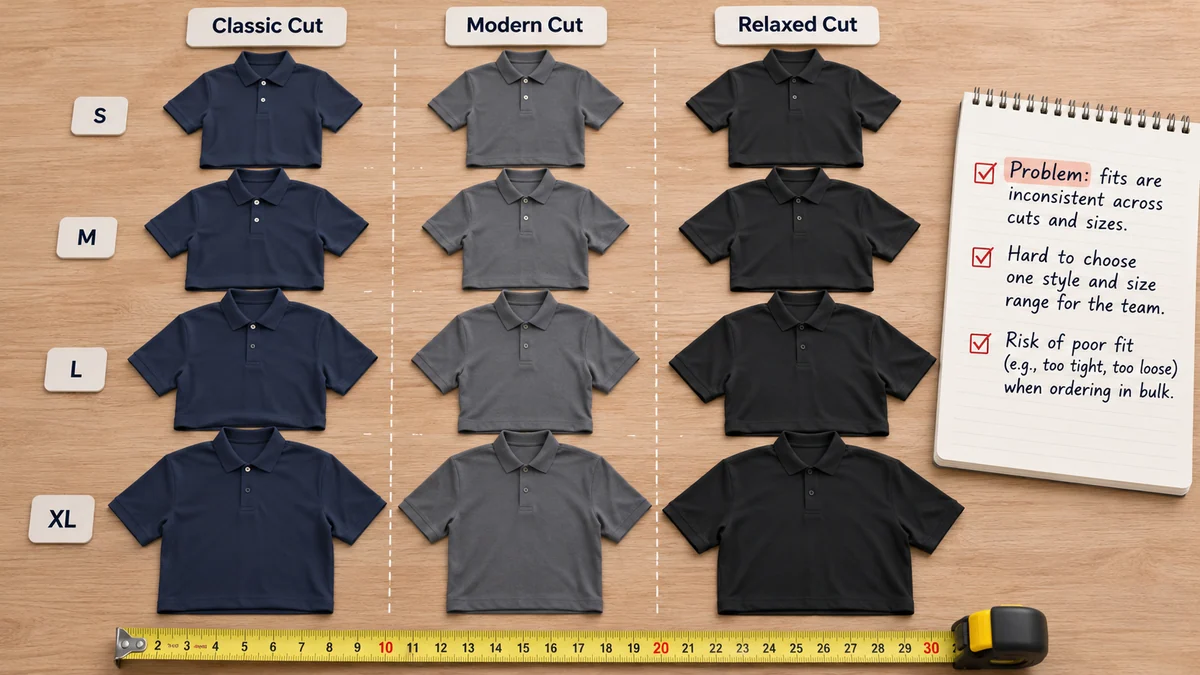
Fit the garment before you approve the quantities
Ask for samples in the exact garment styles, let staff confirm their preferred fit, and collect selections by style code and size. Use the manufacturer’s current measurements if somebody cannot try a sample. Before you approve decoration, reconcile those choices with the quantity list and confirm what can be exchanged or reordered.
At Qualigraphics in Dallas, we handle screen-printed shirts, embroidered polos and promotional products. I would use sample fitting for a staff order with several cuts or people wearing the uniform for a full shift. Fit affects whether the person can comfortably do the job and whether the business will need to place another order shortly after the first one arrives.
Choose the uniforms by what staff do in them
List the roles wearing the uniform and the movements each job requires. A person working at a counter may care about how the shirt sits under an apron. Someone unloading boxes may need room across the shoulders. A staff member working outside may want space for airflow or another layer, depending on the conditions. Give the supplier those uses before narrowing the styles.
Decide whether everyone wears the same garment or whether you need several cuts, sleeves or fabrics. If you want a consistent color across styles, see samples together. A style can fit well and still look different next to the other one. Write down which combinations are approved so nobody substitutes a different style while collecting sizes.
Our guide to logo shirts for outdoor crews discusses fabric and use considerations for hot shifts. Use those conditions to help you pick garments for the fitting.
Ask for samples that match the actual order
Ask the supplier what sample styles and sizes are available and whether you can get a set to try on. Confirm that the samples match the exact manufacturer and style code you are pricing. If there are multiple versions, label each one where staff can see it. Keep the fitting organized by style rather than combining all medium shirts in one pile.
Give employees a chance to try the garment with what they will usually wear underneath it. Ask them to check length when reaching, shoulder room when moving and whether they prefer a more fitted or more relaxed cut. Avoid assuming that everyone wants the same fit. Allow staff to confirm their own selections privately.
If you cannot get all sample sizes, ask which ones matter most for fitting. Cover sizes near the most common choices and the places where the cut varies. Tell the supplier which staff could not try the garment so you can discuss a way to check the measurements.
If several work sites are involved, confirm where each sample goes and when it is due back. Keep the tags readable and avoid distributing the only sample as a uniform before everyone has seen it. Give each site the same recording instructions so the person combining lists can use them without asking what a size entry means.
Show people how to use the size chart
Ask whether the chart lists body measurements, finished garment dimensions or both. SanMar, for example, publishes a separate size chart and product measurements for a polo. Compare like with like. A garment measurement taken flat is useful for comparing two shirts measured the same way. The supplier can help you match that information to the size chart when the person cannot attend a fitting.
A useful fallback is to ask a person to compare the sample specifications with a shirt they already like wearing at work. Follow the manufacturer’s measurement directions and make sure the garment is laid out consistently. Note how they want the new shirt to fit. If they fall between sizes, ask whether a sample can be provided before they finalize the choice.
For a Dallas–Fort Worth staff order with several cuts or work groups, bring us your approved styles, count and deadline. We can talk through what samples and specifications would be useful before you collect everybody’s size.
Keep one size list with the garment code
Set up a simple collection form or spreadsheet. Include the employee or distribution label, the approved style and cut, color, size and quantity. Ask the person to confirm each line if they are ordering more than one item. Add an approval deadline and let them know who can answer questions. Restrict access to the people who need the information to place and distribute the order.
Review the list by garment as well as by person. An extra-large size in one cut may be entirely separate from an extra-large in another. Check for missing selections and duplicate lines, then sum each style, color and size. Confirm that employees getting different items received the allocation you intended.
When you send the purchase quantities, keep a copy of the version you approved. If a person changes their selection, update the same list and ask the supplier to confirm whether the change can still be made.
Confirm decoration before releasing production
Once the sizing is collected, ask to see the art proof for the placement you chose. If the garments differ in fabric or cut, ask whether each needs a separate placement or decoration plan. Logo size and position can read differently on a narrow polo and a larger shirt. Check details near a pocket, seam or zipper before you authorize the order.
Our screen printing and embroidery comparison explains how decoration options depend on the garment. For the design file itself, use our guide to checking whether your logo is ready for production. Give the supplier your final style codes and totals along with your proof approval so the two parts stay aligned.
Ask whether any blanks are backordered. If the supplier suggests a substitute, have the people affected review its fit and confirm its color and decoration. Treat a substitute as a new size decision where the measurements change.
Watch how timing and substitutions affect the fit
Build time for samples, staff choices, stock confirmation and production approval into the delivery plan. Those steps do not necessarily happen on the same day. Ask whether the supplier can check inventory before the fitting and then recheck it after you collect selections. If a size is unavailable, find out whether the rest of the order can proceed and which employees will need to make a new selection.
Give yourself a way to handle someone who joins after the count or cannot get to the sample fitting. Decide whether they can wait for a later order or need an approved stock piece for the first day. If the first order has a hard deadline, tell the supplier which garments must arrive together and which can arrive later. That can affect what alternative you choose when one size is missing.
Ask the person responsible for approvals to be available when any substitution comes up. A quick decision still needs the correct style and size.
Plan for missed sizes and new hires
Ask about exchange terms before decoration, and find out how the supplier handles a production mistake compared with a change of preference. It is useful to know whether you can reorder a single piece, whether there is a minimum and how long the style is expected to be available. Keep the original garment information so you can ask about the exact item later.
Decide whether to order extra pieces based on your hiring and replacement needs. Use the size distribution of the actual staff as a starting point. If the next hires are unknown and you can reorder quickly, you may prefer a smaller stock. If uniforms are needed on the first day, ask what spare sizes would be practical for the roles most likely to need them. Our guide to company stores and one-off orders discusses ongoing ordering options.
Plan how to hand out and verify the order
Assign a person to receive the shipment and check it against the approved list before distributing it. Decide whether the supplier will pack by employee, style or work group. When staff collect their garments, have them confirm what they received. Keep an easy way to report a missing piece or a production issue while the rest of the order goes out.
If something does not fit, look at the reason before making a new choice. Check that the style and size received match what was approved. If the approved choice was wrong, ask the employee what they learned about that garment and record the correction before reordering. That makes the next order easier, even if you keep the same supplier and products.
For a multi-site order, check the labels and quantity by location before boxes leave your office. Tell each recipient where to send a correction and who can authorize a reorder. A uniform intended for another site can look like a manufacturing shortage until the shipment is checked against the distribution list.
Bring your deadline, approved styles and questions
Tell us the date staff need to wear the uniforms, the work they do in them and the styles you are considering. If you have old order records, include the style numbers and what people liked or wanted changed. We can discuss samples, the size collection and the time needed to get approvals in order before decoration.
Allow a little space between fitting and approval for people who are away or need another size to try. Decide who can approve the last version of the quantities and who will check the delivery. The more clearly the choices are captured up front, the easier it is to solve the occasional sizing problem when the order arrives.
Questions people ask me
Does everyone need to try on a sample?
Where possible, let the people most likely to be between sizes or switching styles try the actual garment. Provide a manufacturer size chart and a clear way to ask a fitting question for anyone who cannot attend.
Can we use our last order’s sizes?
Use the old list as a starting point if the style and manufacturer are unchanged. Let employees confirm their selections and check new styles separately.
Should I buy extra shirts in every size?
Base extras on onboarding, turnover and whether the garment can be reordered easily. Ask the supplier about stock and reorder minimums before deciding what to hold.
Can we exchange decorated shirts that do not fit?
Ask about exchanges and return terms before decorating. Confirm how the supplier handles production errors and how it handles a size selected by the buyer.
Sources
Keep reading
More from Becky
- Planning an Every Door Direct Mail postcard: routes, size, print and drop-off, step by step
- Washing branded shirts and polos so the logo still looks new a year later
- Trade show giveaways people actually keep, and how to choose one for your booth
- Why one shirt quote is double another: what really sets the price of custom apparel
Running a business
- Business Consultant · Armando
- Business Broker · Michael
- Franchise Consultant · Avinash
- Recruiting and Staffing Services · Chase
- Information Technology · Anthony
- Computer Software · Brandon


