
Roofing · 7 min read
Could a worn plumbing vent boot be causing your roof leak?
A ceiling stain near a plumbing vent is a clue. Ask a roofer to trace the water path and inspect the flashing before quoting the repair.

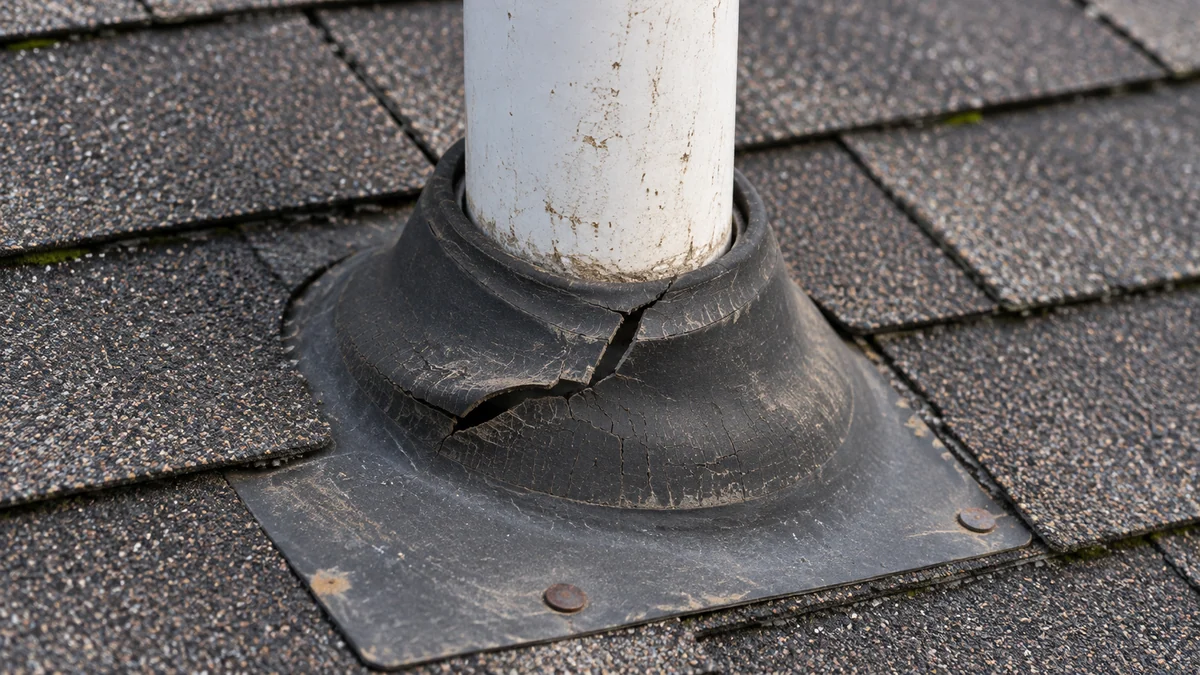
Treat the vent as a lead to check
A worn boot around a plumbing vent can let rainwater into a shingle roof. The roofer needs to confirm that the flashing or collar is the source and check the nearby shingles and roof deck before choosing a repair. If the leak is limited to the vent and nearby materials are sound, a localized repair may be appropriate.
At Verde Roofing, we repair and replace roofs in Dallas–Fort Worth. If you have a ceiling spot near a bathroom or a utility area, I would ask when it gets wet and what you can see from a safe position. Those details are helpful. A stain below a vent still needs to be traced before anyone can tell you whether the boot, another roof detail or a source inside the building is involved.
What the boot does where the pipe meets the shingles
A plumbing vent pipe passes through an opening in the roof. Flashing around the opening directs water past it, and the collar at the pipe helps keep water from getting through the joint. Some assemblies include both pieces in one unit. The installation needs to work with the roofing around it so water can move down the slope.
GAF’s homeowner guidance explains that vent pipes can leak where the flashing is missing, improperly installed or deteriorated. A roofer can inspect the collar for splits, check the way the base is integrated with the shingles and look at the adjacent roof surface. A gap around the pipe is one possible point of entry. Water may also reach an opening because of a problem farther upslope.
Ask which kind of penetration the roofer found. A pipe that vents plumbing, an attic vent and an exhaust outlet serve different purposes and can use different details. Use the name they identify when you compare estimates.
What to record before calling
Write down when the stain first appeared and when it got wet again. Did it coincide with rain, or did it appear when someone used a fixture or ran equipment? If rain is involved, note whether the water appears during the storm or later. Take photos showing the room and the location of the stain, then a close photo that can be compared after another storm.
If you can see the vent from ground level, take a wide shot that shows its location relative to other features. Stay away from wet or unstable areas, and avoid climbing onto the roof or into an unsafe attic to get a picture. If water is near a light, wiring or a sagging ceiling, keep clear and get appropriate help. Our guide on what to do when you find water coming through the ceiling can help with the first call.
Keep your notes even if the area dries before the roofer arrives. A weather pattern can help the roofer choose what to examine first. If water appears in a different room or the stain grows, add a separate entry so the next person looking at it can distinguish a new symptom from the original one.
Ask the roofer to trace the source
The ceiling mark and the opening in the roof may be separated by more distance than you expect. Ask the roofer to explain what they can observe from the inside where access is safe, what they find at the vent, and what else they checked nearby. A stain can mark the point where water emerged rather than the point where it entered. The surrounding evidence is what matters.
Tell the roofer about prior patching and repairs, including whether a different person worked on the pipe. Share whether the leak occurred again afterward. Ask them to take photos of the part they want to repair and show you what suggests it is responsible. If the source is still uncertain, ask what next check will narrow it down.
If you have a leak in the Dallas area, send us the location, timing and pictures you can take safely. We can talk about what to inspect and what else might need to be ruled out before you approve work.
Choose a local scope based on the condition around the vent
If the boot is failing and adjacent roofing is serviceable, ask how the proposed replacement will fit the pipe, the slope and the roofing material. Ask which nearby shingles need to be lifted or replaced and how the new flashing will be integrated. The manufacturer’s instructions and the condition of the roof matter. Ask what can be verified before work and what depends on what is found when the area is opened.
If the collar is sound and the flashing is installed incorrectly, the repair may need to address the flashing and nearby materials rather than simply changing the collar. If the decking is wet or damaged, ask how that will be evaluated. Tell the roofer if you have an existing roof warranty and ask what requirements you should confirm before authorizing changes.
Our guide to deciding between roof repair and replacement covers the broader decision if the roof has several other issues. Ask for evidence of those conditions separately from evidence of the vent leak.
Ask whether a proposed patch is temporary
If a contractor suggests a sealant application, ask what they believe failed and whether the work is an interim measure or the full repair they recommend. Get the reason for the choice. A crack in a collar and an issue in the way flashing drains can call for different work. Ask what would lead the contractor to replace a part instead of applying sealant.
Get the estimate in writing and ask what it includes. Access, roof height, roof material, nearby shingles and possible deck work can affect the scope. If there are several vents, ask whether the quote covers the one that appears to be leaking or whether the roofer inspected all of them. Ask what happens if similar parts are worn but there is no evidence they are leaking. You can decide whether to address them now with a clear picture of their condition.
Ask how the estimate handles a change after the area is opened. Decide who will be called if hidden damage appears and what information you want to see before approving added work. Ask who will protect the opening if conditions change before the work can be finished. Having that conversation before the crew starts is easier than deciding during a storm.
Talk about what will happen below the roof
After the source is fixed, any moisture in the ceiling, insulation or other affected materials needs its own review. Ask the roofer what interior conditions they observed and which trade can help evaluate drying or repair. If there is active water or an electrical concern, get appropriate help for that part of the problem. For symptoms you can describe to a restoration company, see signs of hidden water damage in walls or floors.
A ceiling stain may remain after the leak is addressed. Save pictures from before the repair and ask how to check whether there is still active moisture before repainting. If damage is extensive, keep the roofing and interior repair scopes separate so you know who is responsible for each. Document what was repaired and note what you still need to check.
Check for other sources near the same roof area
A vent may sit near a ridge, a wall, another penetration or an area where water collects as it moves down the roof. Ask what the roofer looked at in the nearby area and whether the condition of those details supports the diagnosis. If the property has more than one roof slope above the stain, explain how the rooms line up with what you can see outside. A prior owner’s photos or repair records may help identify where work was done.
Tell the roofer if the dampness appears when there has been no rain. A plumbing connection, a vent connection or condensation may need a different kind of inspection. Ask which observations would point to another trade. If more than one professional is involved, share the same timeline and pictures. That gives each person a chance to assess what falls within their work and identify what still needs to be checked.
Decide how to verify the repair
Ask for photos of the repair that show how the area around the vent was put back together. Request a written description of the part replaced, any nearby work and what the contractor will do if water appears again. Confirm who you should contact and whether the contractor recommends a follow-up check after rain.
Check the interior at a time and from a place where you can do so safely. If new water appears, note the timing and contact the contractor. Compare current photos with the ones you took earlier. Our annual North Texas roof maintenance guide includes other parts of the roof to keep on the inspection list after this repair is resolved.
Bring a timeline and the photos you have
If you call us, tell us what room is affected, when water shows up and what repairs have already been attempted. Point out any access concerns and let us know if you can see a vent from the ground. We can discuss an inspection and the work a local repair may involve.
Review the estimate with the evidence in hand. You should be able to see what suggests the vent is the source, which material will be replaced or repaired, and what the contractor needs to check before considering the leak resolved. Keep the photos and scope with your property records for the next roof visit.
Questions people ask me
Can a roof vent boot leak only in certain rainstorms?
A leak can depend on the direction and amount of rain and the path water takes across the roof. Record which storms produce it and ask a roofer to inspect the flashing and surrounding roof.
Does a ceiling stain show where the boot is leaking?
It can help narrow the search. Water can move along building materials before appearing inside, so the roofer needs to trace the path and check nearby potential sources.
Can a roofer replace a boot without replacing the roof?
A local repair may make sense if the failure is isolated and the nearby roof is serviceable. Ask the roofer to show what supports the recommendation and what conditions could change it.
Should I climb up to see if the collar is cracked?
Take photos from the ground or another safe, dry position if the vent is visible. Leave roof access and close inspection to a qualified roofer.
Sources
Keep reading
More from Chris
- Repair, coat or replace: deciding what a leaking flat commercial roof really needs
- Solar on an aging roof: when to replace the roof first and when to go ahead
- Metal roof or asphalt shingles: which is better for a house in Dallas?
- What actually sets the price of a new roof in Dallas–Fort Worth
Your home
- Gutters · Jordan
- Painter · Andrey
- Power Washing · Doug
- Foundation & Concrete · TJ
- Drywall Repair · John
- Handyman · Lindsay


