
Pest Control · 7 min read
Why German cockroaches keep coming back after apartment pest control
A recurring apartment roach problem needs a reliable identification and a plan for follow-up. The useful evidence is where the insects are found and how that pattern changes.
Find out whether the problem is persisting or being reintroduced
If German cockroaches keep appearing after apartment pest control, ask for a confirmed identification, monitoring in the affected areas, and follow-up coordinated by property management. Some insects may have survived where the first treatment did not reach, or they may be coming in again through movement of goods or from another affected area. A dated record of where you find them helps the technician tell which explanation fits.
I would start by asking what the last visit found and which part of the apartment was inspected. If you know only that a technician came by, ask what evidence they used and whether there is a plan to return. One visit and no follow-up can leave you with no way to tell whether the activity is improving.
Texas A&M's urban entomology program describes German cockroaches as primarily indoor pests, often seeking shelter near food and moisture. It also notes that they can enter in items such as groceries or luggage. Those are reasons to look at what is happening inside the unit before assuming the building exterior is the answer.
Record what you see without disturbing the treatment
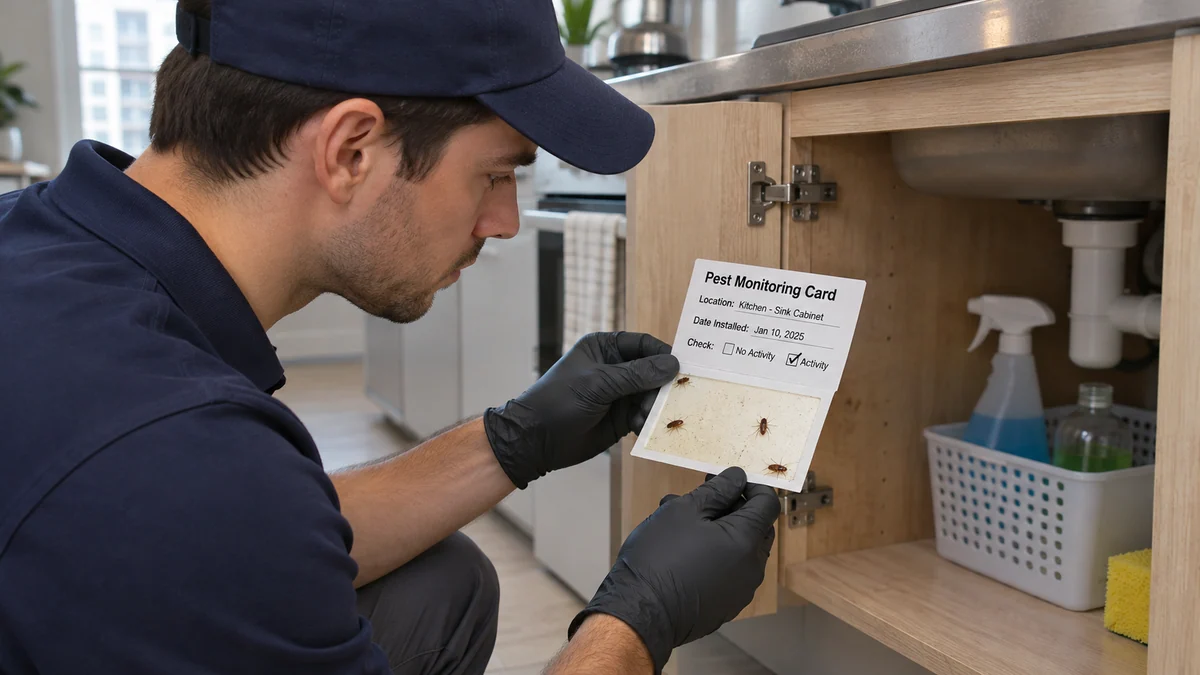
Note the day, room, and exact location where you see an insect. A photo can help if you can take it without moving appliances or reaching into a tight space. If you already have instructions for monitoring cards, leave them in their assigned places and record when they were checked. The position matters when someone compares activity over time.
Include whether the sightings are mainly near the same cabinet, pipe opening, or appliance. Tell the property manager if you noticed a leak or a change such as repair work or a delivery. Share the sequence as an observation. It is more useful to say that activity increased near the sink after a repair than to assume where the insects came from.
Leave traps or bait placed by a technician alone unless you were told otherwise. If a child or pet can reach a device, contact the provider or property manager about safe placement. Our guide to pest control in homes with children and pets explains questions to ask about those arrangements.
Ask the manager to coordinate access and follow-up
Send the property manager a brief record of the activity and the date of the most recent visit. Ask who schedules follow-up and what the pest technician wants you to prepare. If several visits have occurred, include that history so the next person can see what has already been tried. Keep the work order number with your notes.
A technician may need to check a utility or plumbing area, a shared space, or another unit to investigate a recurring pattern. The property manager is in a better position to arrange access and coordinate repairs. Let the manager or technician handle communications about other residents instead of assuming a neighboring apartment is the source.
At Eco-Safe Pest, we work with homes and businesses, including multi-family properties. If you want to discuss recurring activity in a Dallas apartment, start with where it occurs, who manages the property, and the information available from previous service. That helps define who needs to be involved in the next inspection.
Reduce food, water, and hiding places where you can
Clean up accessible crumbs and spills and store food in closed containers. Wipe up water that collects around the sink and report leaks or condensation that you cannot correct. If cardboard and stored items make a cabinet difficult to inspect, ask the technician what should be cleared and where it should go. Avoid carrying suspect items into another room just to clear the counter.
Texas A&M identifies reducing food, water, and shelter as part of controlling German cockroaches. In an apartment, that can involve both the resident and the maintenance team. The resident may be able to keep a counter clean, while the team needs to fix a slow leak or address an opening around a pipe.
Follow the provider's directions if you were asked to move items before a visit. Ask what should be left in place afterward and when a surface can be cleaned. You want your efforts to support the plan and leave the technician able to see whether the treatment is working.
Ask what the technician is measuring
Texas A&M's integrated pest management guidance describes sticky monitors as a way to detect cockroaches and learn where they are active. A trained technician can use observations and counts to check whether activity remains concentrated or is showing up elsewhere. Ask what is being recorded and when the monitors will be checked again.
Different rooms may need different attention. A few sightings around an appliance can raise questions about shelter nearby. Activity in multiple areas can prompt a broader look at what connects those rooms. Tell the provider whether you are seeing small insects as well as adults, and give them photos when possible so they can make the identification.
I would also ask what result changes the next visit. If the technician expects activity to decline, ask what you should report if it stays the same or increases. A useful follow-up has a clear next decision based on what was found.
Tell the provider about any product already applied
List any spray, bait, or other pest product used in the apartment and where it was applied. Give the provider the label or packaging information if available. A product used on one surface can affect where the technician places another control, and some approaches can interfere with bait. The provider needs to know what was used to plan the next visit safely.
Read and follow any applicable product label and the instructions from the pest professional. If you are unsure what remains in an area, tell the provider before cleaning or putting another product there. The guide to choosing a pest control company suggests questions to ask about identification, treatment and follow-up.
For a rental, check with property management before applying products or making repairs. If someone in the unit has an exposure concern, mention it when arranging service so you can discuss preparation, access, and any restrictions with the technician.
Look at recurring moisture and openings as maintenance issues
A repeat sighting by the same sink or wall is a reason to look more closely at what is there. Note a gap around a pipe, a dripping fitting, or an inaccessible space the technician identifies. Share the location with maintenance and ask which items it can address and whether the pest provider wants to inspect before a repair.
Keep the pest work and maintenance work on the same timeline. If a cabinet is repaired after the first visit, the technician may need to check it again. A short record of service dates, repair dates, and sightings makes that conversation easier.
Our guide to keeping pests from returning after treatment explains how prevention fits after a visit. For German cockroaches in a multi-unit property, ask which measures apply in your apartment and what the manager needs to coordinate elsewhere.
Agree on when the case should be checked again
Ask what interval the provider wants for follow-up and how it will judge improvement. An empty monitor can be useful, but the person checking it needs to know whether it stayed in place and whether sightings continued somewhere else. Give the provider the full picture before concluding the issue is gone.
If you keep seeing the same pattern, ask for a review of the identification, accessible areas, and any maintenance problems. You can do that with a short summary of what changed since the previous visit. The person planning the next visit should be able to explain what they will check that has not yet been checked.
Plan what to do with boxes and deliveries
If the technician wants to check for insects carried in with belongings, start with the items that entered near the time of the first sighting. Mention any used appliances or furniture, grocery boxes, or luggage that spent time in an affected room. A list of what moved and when gives the technician another way to investigate the pattern.
If you are moving to another unit while the problem is being addressed, ask the provider how to handle belongings that have been in an affected space. Do not assume a change of address is enough. Get advice about what can be checked or cleaned safely before packing and how to keep the clean items separate.
A property manager can use the same approach when an apartment turns over. Ask the manager how an open pest concern is communicated to maintenance and whether monitoring can continue once the next unit or shared space has been checked. Reports and repair dates are easier to follow if someone records them in one place.
What to bring when you ask for an inspection
Share your apartment layout in simple terms, the rooms with activity, and any photos or past work notes. Let me know whether the unit is in Dallas or elsewhere in the service area and whether the property manager is already working with a provider. A repeat problem is easier to discuss when you can explain which spots were checked and which were not.
I would ask the next technician to describe what they saw, what they need from maintenance, and when they want to assess progress. That gives the resident and property manager the same plan for what to do between visits and what to report if activity continues.
Questions people ask me
Do recurring German cockroaches prove they came from a neighbor?
No single sighting establishes where the insects started. A technician can examine the pattern, the unit, and relevant nearby areas with the property's cooperation.
Do I need to empty every cabinet?
Ask the provider what it needs for inspection and treatment. Move only what is needed and follow the instructions for handling items that could be affected.
Should I spray where the technician placed bait?
Ask the technician before applying any product in a treated area. Some applications can interfere with bait, and any pesticide must be used according to its label.
When do I tell the property manager it is still happening?
Send dated updates when you see recurring activity and follow any instructions you received for reporting. Ask when the next inspection is planned and what information would help the technician.
Sources
Keep reading
More from Gregory
- Fleas in the house after treating the dog: why they keep coming and how to end it
- A wasp nest by the front door: when you can remove it yourself and when to call a pro
- Termite bait stations or liquid treatment: how to choose for a Dallas house
- What pest control costs in Dallas depends on five things, and the pest is only one
Your home
- Roofing · Chris
- Gutters · Jordan
- Painter · Andrey
- Power Washing · Doug
- Foundation & Concrete · TJ
- Drywall Repair · John


