
Fences & Decks · 7 min read
How to close fence gaps for a dog in a sloped yard
The biggest opening in a sloped yard may be under a level panel or a gate. Here is how to find it and decide whether to repair one area or rebuild the run.
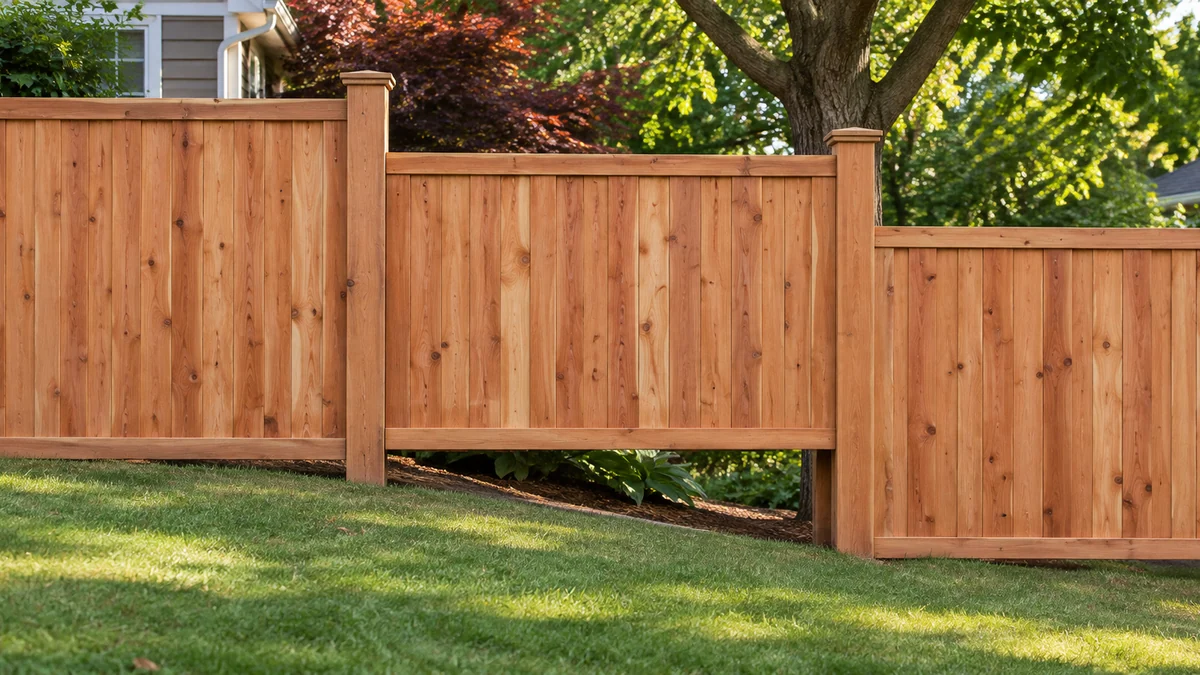
Follow the ground beneath the fence
To close dog-sized gaps on a slope, I check the fence from ground level and find the widest openings under panels, around posts, and beneath gates. A stable fence may need only a properly fitted infill at one location. If the same gap repeats along the run, consider panels that follow the slope or stepped panels with a planned lower edge that closes the openings and lets water drain.
Start with the area you want your dog to use. The front-to-back slope may be obvious, but shallow dips across the side yard can be just as important. A straight line at the top can make the fence look consistent from the patio while the ground falls away underneath it.
The American Kennel Club describes several ways dogs get out, including digging, jumping, and slipping through weak spots. If your dog has already escaped, keep the yard off limits for unsupervised use while you identify the route. A repair should deal with the opening you found and the way your dog used it.
Make a gap map before you buy materials
With your dog inside or on a leash, walk the fence from the yard side. Photograph each opening at its widest point with a tape measure in the frame. Then take a wider photo that shows the post, panel, and surrounding slope. On a long run, use a sketch or label the photos in order so you can point the builder to each spot.
Look closely where the fence changes direction or meets the house, a retaining wall, or a different kind of panel. A tight-looking run can end in an awkward opening near a utility box or a change in ground level. Check both the bottom edge and the spaces between boards or metal pickets, especially if a small dog will use the yard.
Finally, look at what changed. Bare dirt and fresh digging point to a different repair than old erosion, a loose picket, or a rail that has moved. If a panel leans or the post moves with normal gate use, bring that to the builder's attention. Our guide to repair versus replacement for a leaning fence helps you identify what should be checked before a gap is filled.
Compare a stepped fence with one that follows the slope
On a stepped fence, the panels stay level and drop at the posts like stairs. Picture a level panel over ground that slopes steadily downhill. The open space below the panel grows toward the lower end. Shorter sections or a fitted lower edge may be worth discussing where the openings repeat.
A racked panel follows the slope with angled rails and upright pickets or posts, depending on the system. Bufftech's installation guide illustrates both methods and shows how the amount of slope affects whether its panels can be racked. Any prefabricated system has to be checked against its own instructions. For a fence built on site, ask how the bottom will handle a dip that starts halfway across a panel.
I would choose the approach by looking at the grade, the materials, and the gate position together. The layout may change where the yard levels out or meets a shared fence. Our comparison of wood, iron, and masonry fencing can help you decide which materials make sense to discuss before the contractor draws the run.
Give the gate its own plan
A gate needs clearance through its whole swing. A leaf that fits when shut can hit the ground as it opens uphill. A gate hung higher to clear that point can leave an opening below it in the closed position. I like to look at the closed gap, the latch side, and the path the gate has to swing through together.
If the latch engages only when you lift the gate by hand, figure out why the gate shifted before adding anything to the bottom. A loose hinge and a moving gate post call for different work. Our guide to a gate that drags or will not latch explains what you can observe without taking the gate apart.
Tell the builder who uses the gate and what needs to fit through it. A gate that opens for lawn equipment or trash bins gets used differently from one that serves a quiet side yard. If you can show me a photo of it shut and another partway open, I can see where to start when we walk the property.
Close the opening without trapping the runoff
An opening at a low point may also be the path rain takes out of the yard. Look there after rain, from a safe spot, and see where the water goes. I would avoid piling soil against the fence or dropping a solid board across a runoff path before understanding how water leaves that area.
For a dog that digs at the fence line, the American Kennel Club describes an inward-facing mesh barrier at the foot of a fence as one option. Ask a builder how the barrier would be secured, where the cut edges would sit, how the area would be maintained, and what must be located before anyone digs. If the dog can pull a piece loose or reach an exposed edge, the detail needs more work.
Some gaps are easiest to deal with by fitting the fence to the terrain. Other locations call for a separate discussion about drainage or a retaining wall. If a fence would sit on top of a retaining wall or a pool barrier is involved, check the applicable local requirements before changing it. In Dallas, the city publishes separate guidance for both. Our fence approval and property line guide explains which documents to have ready.
Use the inside of the yard to judge effective height
Walk the fence again and look at the surface a dog can stand on. A bench, raised planter, retaining ledge, or deck beside the fence can shorten the distance to the top. Moving furniture may address a tempting route without any construction. A permanent raised surface belongs in the conversation before you approve a fence height or material.
If you plan to raise the yard-side walking surface, bring the finished elevation into the design. Our guide to building a deck over an old patio explains how to think through the new height before construction. With that height in hand, the fence builder can assess the run from the side where the dog will use it.
Some dogs also react to activity on the far side of a fence. If that is what sends your dog toward the edge, tell the contractor where it happens. Whether the design leaves a view through the fence is a decision to make alongside clearance and upkeep.
Decide whether to repair one spot or rebuild the run
At Park Cities Fence & Deck, we repair posts, pickets, rails, and sections when the fence is worth keeping. One sound run with an isolated opening is a good place to ask about a targeted repair. Widespread movement, failing parts, or openings that repeat at every grade change can make rebuilding that section a more practical proposal.
Ask for a written scope that points to the openings being addressed. It should say which posts or panels stay, whether any gate hardware changes, what material closes each gap, and what cleanup is included. Access, rock, slope, the number of adjustments, and the length of fence involved can affect the estimate. When comparing bids, have each contractor walk the same line with you and explain what happens at the low points.
If the fence is shared or close to a boundary, pull up your survey before changing its location. The line the old fence follows and the line a new layout can follow are questions to settle before an order goes in.
Plan for the days when the fence is open
Before you accept an estimate, ask how the work will be staged if the dog normally uses the yard every day. A crew may need to remove several sections to reset a post or carry materials through a gate. Ask when the first opening will appear, how workers will access the yard, and when you can check the finished enclosure. Those questions can matter as much to your routine as the expected finish date.
I would plan on keeping the dog inside or using a leash outside until the permanent barriers are back in place and you have checked them. Temporary protection for a work area may serve a different purpose from a fence you would trust with your dog. At a Dallas-area house with a busy side gate, agree with the crew on when that gate can remain closed and who needs access.
Walk the finished fence from your dog's side
Bring the photos or sketch to the final walk so you can revisit each opening. Open and close each gate normally, check the latch, and look again at the house connection, the corners, and the low point of each sloped section. Check the same areas after the next heavy rain or after someone works near the fence line. Soil and runoff can change what is open below a panel.
When you reach out to me, describe your dog, how the yard is used, and where you think the problem starts. Send a wide view of the slope and photos of the fence bottom and gate. We can then look at the property together and decide whether the job needs a fitted repair, a different panel layout, or a change at the gate.
Questions people ask me
Can I fill the opening under a stepped fence with soil?
First check why the ground is low and where water runs. Filling the area may change drainage or keep soil in contact with fence boards, so ask whether a fitted fence detail would handle the opening better.
Will a fence that follows the slope keep my dog from getting out?
A design that follows the ground can reduce gaps beneath the panels. You still need to check corners, gates, picket spacing, and the places where your dog could dig or climb.
How much clearance should I leave under a fence gate for my dog?
The useful clearance depends on the dog, the gate, and the ground through its swing. Check how the gate operates and measure the widest opening when it is closed, including at the latch side.
Can I keep an existing fence if the dog gets out in one place?
A localized repair may be enough when the surrounding posts and panels are sound and the route out is clear. Check the rest of the yard at the same time so the work accounts for other openings or loose sections.
Sources
Keep reading
More from Jack
- The storm took down the fence: what Texas homeowners insurance usually pays, and what it does not
- Cedar or composite deck boards: which one suits a Dallas backyard
- How long a new fence takes in Dallas, from the first visit to the final walkthrough
- Can you build a deck over a cracked concrete patio?
Your home
- Roofing · Chris
- Gutters · Jordan
- Painter · Andrey
- Power Washing · Doug
- Foundation & Concrete · TJ
- Drywall Repair · John


