
Outdoor signs (Billboards) · 7 min read
What a digital billboard rotation means for the hours your ad runs
A digital board shares time among messages. I help buyers read the rotation and confirm when their own artwork will actually appear.

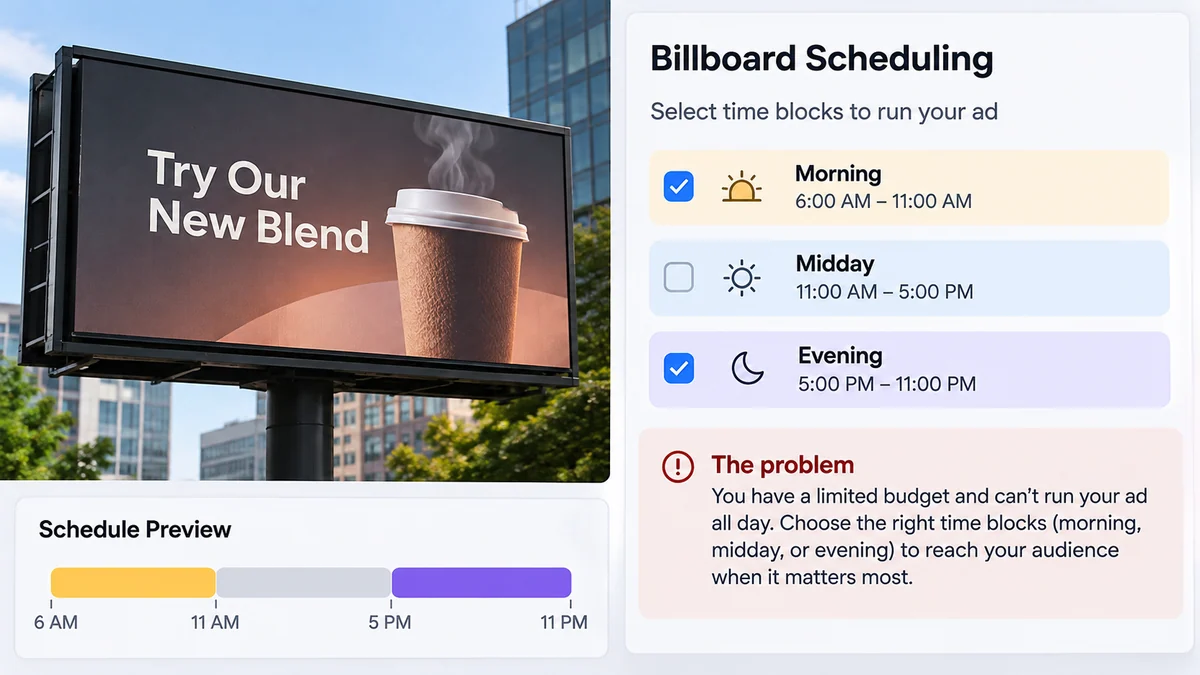
Read the rotation and the schedule separately
A digital billboard rotation is the sequence of ads the display shows one at a time. Your ad appears during its assigned plays, while other messages can appear between them. Some campaigns can be scheduled for certain hours or use different artwork at different times, depending on the display and the terms available. Ask for the location, the run dates, the eligible hours, and what your agreement says about how often your ad can appear within those hours.
I’m Staci Stovall with Lamar Advertising. When a buyer in Dallas–Fort Worth asks me for a digital board, I want to know whether the message needs a specific time or whether the buyer simply wants to reach people who use that route. A restaurant promoting a lunch offer may need a different schedule from an employer promoting an open position. Make that distinction before you start comparing proposals.
Lamar describes digital ads as rotating in a slide show, with the ability to change artwork by time. The display’s technical ability to run a timed message is one question. Whether that location has the inventory and terms for the hours you want is another. Confirm both with the proposed buy.
Learn what each term in the proposal means
A play is one instance of the artwork appearing. A rotation is the sequence the screen works through. Ask the representative how the plan describes your presence in that sequence and what delivery it specifies. Some proposals may use a term such as share of voice. Ask for a plain-language explanation for the specific display and whether the number applies throughout the booked hours or only within part of the plan.
An estimate of audience impressions is a different measure from plays. An ad can play while few people are near the board, or during a period when many people are moving through the area. Ask which figures describe delivery on the screen and which estimate people’s opportunities to see it. My guide to measuring outdoor advertising explains how to connect the campaign to a separate measure of customer response.
Get the board face and travel direction in writing. If one structure has displays facing different traffic, knowing the intersection is only part of the decision. Ask which approach can see the artwork and confirm it matches the route you are trying to reach.
Decide whether you need certain hours or different messages
Start with the action you want someone to take and when they can reasonably take it. For a breakfast promotion, it may help if the message runs before a customer chooses where to stop. For a service call that people book at home later, you may care more about the routes they use regularly than about the exact hour they see it. A narrow time window is useful when it matches a real decision.
Buying only certain hours and using different artwork during a broader buy are separate requests. The first asks whether the ad can be limited to a time block. The second keeps a larger schedule and changes the message for part of it. Ask the representative to show what each option would look like if both are available. If the schedule cannot be narrowed, find out whether a different location or creative approach would still do the job.
Use the location to test your assumption about the audience. My guide to choosing a billboard location gives you ways to compare routes. A morning audience can be moving away from the business rather than toward it, even when a map shows that the board is close.
Build the calendar around the deadline people actually face
Write down when the promotion starts, when the offer ends, and when people need to act. An event taking place Saturday may need to reach people while they are still making weekend plans. A sale may need the creative to change when the deadline passes. Ask when the schedule starts and stops in local time and who will confirm that the artwork has switched.
Check how weekends, holidays, and exceptions affect the schedule. If the offer runs only on weekdays, say whether you want any message on weekends and provide a separate file if needed. An advertisement that mentions today or this evening makes the timing especially important. Review the proposed calendar next to the offer details rather than relying on a verbal description of the campaign.
If you have a shorter window around a recurring event, ask whether there are options for adjacent times or locations. Find out which placements are available before designing something that can only work at one exact hour. My guide to campaign duration explains the tradeoffs between a short event push and a message that needs repeated exposure.
Ask for the information you can compare across quotes
Ask each seller to show the location and face, dates, eligible hours, creative requirements, and delivery terms for the proposed schedule. If you have asked for morning hours only, check that the proposal actually says that and identifies any exclusions. If there is an audience estimate, ask what period and geography it covers. That makes it possible to understand what changed between two proposals.
For a Dallas–Fort Worth campaign, send me the location you want to reach, the offer, and the hours when it matters. I can help you check what is available and discuss what the delivery terms mean for the message. If you are still deciding how to buy, my comparison of digital and static billboards explains why a rotating digital slot and a dedicated printed face behave differently.
Check what happens if the board is unavailable, artwork arrives late, or your dates change. Ask which changes are included and whether other fees or availability limits apply. The specific terms belong in the proposal, including anything you are assuming about changing creative during the campaign.
Make each version work on its own
Drivers may see one of your designs without ever seeing another. Make sure each file shows who you are and what a reader should remember. If a lunchtime version mentions a special, give it enough context to make sense by itself. A later version can show a different message without assuming the driver saw the first one that morning.
Keep the variants easy to identify when you hand them over. Use clear filenames and a small table matching each file with the hours and dates it should run. Confirm which board and format each file is meant for. Ask the representative to review the creative against the display’s requirements and what the viewer can read from the road.
My guide to readable billboard design covers the basic legibility decisions. If you have added an hour, a location, or an event date, review it at a small scale before approving it. The most important detail should still be easy to spot.
Agree how the run will be checked
Ask what evidence is available after the campaign begins. An operator may provide a report on when creative played, an image of it on the display, or another confirmation. Find out when you will receive it and which parts of your proposed schedule it can verify. A photo can show how the artwork looks on a board, while a schedule or delivery report can answer a different question about when it appeared.
If you plan to check the display yourself, pick an approved, safe vantage point. Remember that the screen rotates. One moment when your file is not showing tells you little about the rest of the schedule. If something looks wrong, note the board, direction, date, and time and ask the representative to check the booking and available records.
Compare your own campaign measures with the booked dates. If you track inquiries or store visits, note other promotions that ran at the same time and changes in opening hours. That gives you a more useful discussion after the campaign than attributing every result in the period to one display.
Choose the simplest schedule that fits
Compare a broader schedule with the time-specific option before deciding. A wider schedule may fit a message meant for people at several points in the day. A narrower one may fit an offer that only makes sense before a decision or deadline. For either option, ask what availability and delivery terms you would actually buy, and check whether any limits affect your preferred dates.
If the budget only covers a limited run, decide which matters more to you: a particular route, a particular time, or a longer stretch of days. Give the representative that order of importance. It helps them explain a tradeoff if the original location and schedule are unavailable together.
Ask which part of the campaign you could adjust if the first message needs a change. You may be able to keep the schedule and revise a file, or you may find the time window itself needs review. Keep the choice tied to the result you wanted to test.
What to bring to the first campaign conversation
Bring the address or area where you want to reach people, a sentence about the action you want them to take, and a calendar of the dates and hours that matter. If you already have artwork, bring the draft and say which version you want to appear when. If the offer expires, write down the stop time and what should replace it.
We can review which locations and time options are available, then check the proposal against the hours you need. Before you approve it, ask to see what the booking says about where and when the ad will run. Keep that schedule with the artwork approval so the person managing the campaign can check the right version at the right time.
Questions people ask me
Will my ad stay on the digital board the whole time I booked?
Ask how your ad is scheduled within the display’s rotation. A date range or time window can describe when it is eligible to play rather than continuous display.
Can I buy only morning or evening hours?
Availability depends on the location and the terms of the proposed campaign. Ask whether those hours can be booked and check what the written schedule includes.
Can I use different designs at different times?
Digital systems can support changing creative by time, but confirm the options for your specific board and booking. Give the operator a clear schedule matching each file to its dates and hours.
Does a play mean a person saw my ad?
A play records an instance of artwork being shown. Audience estimates describe a separate measure, and customer response needs its own method of tracking.
Sources
Keep reading
More from Staci
- What you can put on a billboard, and why an ad can be sent back for changes
- Programmatic digital billboards or a direct booking: which way to buy outdoor in DFW
- Billboard mistakes that waste a small business's budget, and how to avoid each one
- What a billboard costs in Dallas–Fort Worth, and the six things that set the price
Running a business
- Business Consultant · Armando
- Business Broker · Michael
- Franchise Consultant · Avinash
- Recruiting and Staffing Services · Chase
- Information Technology · Anthony
- Computer Software · Brandon


