
Painter · 7 min read
Can you hang wallpaper over textured walls? How to decide what prep you need
The same wallpaper can look different on orange-peel drywall and on a smooth wall. Here is how to check texture, compare prep options, and get a quote you can use.

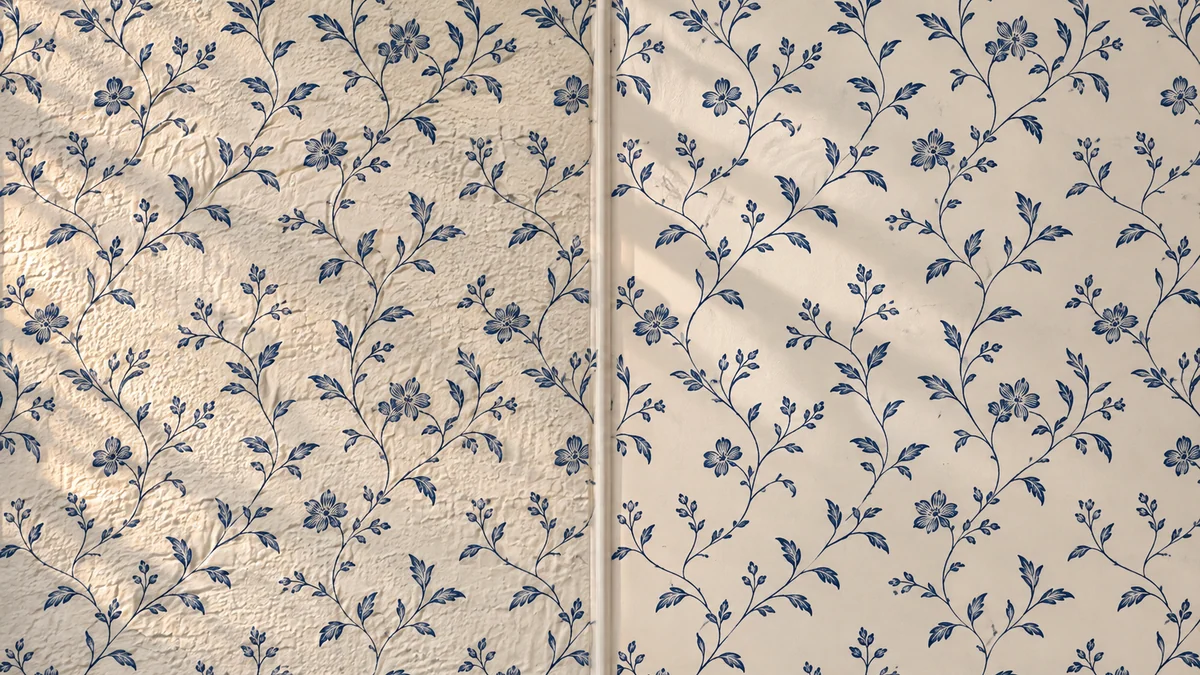
A paper sample can tell you what the wall will show
Smooth textured drywall first if the wallpaper maker calls for a smooth surface, if you can see the texture through a sample, or if the paper cannot make even contact with the wall. In many painted rooms, that means a skim coat, which is a thin layer of joint compound leveled across the surface, followed by the wallcovering primer the product calls for. A compatible liner can be an option over some stable, lightly irregular surfaces. I would settle that with the actual paper and a look at the wall before ordering the rolls.
I’m Andrey Shelokovskiy of Nomad Painting. When we look at wallpaper work around Dallas–Fort Worth, we inspect the surface as carefully as we look at the pattern. The paper you love in a sample book might look different on an orange-peel wall next to a tall window. In that setting, light travels across the wall and picks up small shadows, so the texture underneath can stand out even when the printed design is busy.
Check the texture in the room where the paper will go
Stand across the room at the distance you normally see the wall. Then walk to the side and look along it while daylight or the usual room lighting crosses the surface. Notice whether you see fine stipple, broad knockdown ridges, old repair outlines, or raised edges where someone painted over a previous wallcovering. Different parts of one wall can require different prep.
Hold a loose piece of the wallpaper against the wall without adhesive. This gives you a first look at its color and opacity in the room. It only gives a rough indication of how texture might show through, because the paper is still loose. Ask for an approved test area or sample board if the surface is heavily patterned, the material is expensive, or you are deciding between two prep options.
Take photos with the light coming from the side, and include a wide view that shows corners, windows, and trim. A close photo of a ridge helps me see what you mean, but the wide shot tells me whether it runs behind a vanity or stops at the edge of an accent wall. Both matter to the quote.
Texture and adhesion are separate checks
The first question is whether you will see the surface through the paper. Thin, smooth paper may reveal bumps around the seam or old patches that the pattern only partly masks. A textured face can make some small imperfections less visible, but a thick paper can still bridge over depressions or show a raised edge at a seam. A smoother wall gives the installer more control over both.
The second question is whether the wallpaper and its adhesive can make consistent contact with the surface. A high ridge can touch the backing while the low areas beside it leave pockets. Loose paint or patching compound can also release beneath paper that seemed to stick on installation day. Roman Products describes different preparation approaches for textured walls, including skimming and lining, and calls out the importance of choosing a primer suited to the surface.
I ask about stains, peeling paint, or a patch that keeps changing. If the wall still gets damp, resolve the source and assess the surface before covering it. This guide to signs of hidden water damage can help you identify what to raise with a restoration professional. A soft or growing patch needs a closer look before you consider any wallcovering.
Compare the prep options using the paper’s instructions
For sound painted texture, our wallpaper installation service uses skim coating where smoothing is needed. The point is to flatten the wall as a whole, including repaired spots, so the seam between two strips does not cross a hump. Once the surface is ready, use the primer and adhesive system specified for the paper and the prepared wall. Treat the manufacturer’s instructions as part of the scope.
A liner is a separate wallcovering installed below the finished paper. It can bridge some shallow irregularities when the system is compatible. Ask what the liner will hide on your wall, how its seams will be managed, and which prep is still required around damage or deep grooves. A liner quote and a skim coat quote can both make sense, but the wall and finish sample should explain the difference.
For peel-and-stick products, start by checking the seller’s written requirements for the wall texture, the current paint, and its cure time. If you rent and cannot alter the surface, those instructions may decide whether this wall is a good candidate. Use a permitted sample before committing the whole wall, and confirm with the property owner before applying anything.
Get the scope of the smoothing work in writing
If you have picked a paper and the wall has heavy texture, send us the product name, its instructions, and a photo of the wall by a window or lamp. We can look at the wall and discuss what would go into a quote. If you have only chosen a pattern, bring the sample or the product link and note whether you want a single accent wall or the whole room.
Ask where the finish will end. A bedroom accent wall might stop cleanly at inside corners, while wallpaper in a powder room has to meet tile, trim, and plumbing fixtures. If you are comparing quotes, my questions to ask a painter about surface prep can help you ask each installer to spell out the preparation they priced.
Get agreement on the paper purchase before work begins. Ask who calculates quantities, who confirms rolls are from the same run where relevant, and whether you should keep a reserve for future repair. Width, wall height, and pattern repeat all affect the usable length of each roll. A calculation based only on the room’s floor area does not tell you how many matched strips can be cut.
Use the sample to settle seams and transitions
Some rooms have an obvious focal point, such as a bed centered on a wall. In others, you see the paper first from the hall and then again reflected in a mirror. Ask where the installer plans to place the first full strip and where the pattern will end. A seam or narrow cut near the main sightline might influence the layout even when the wallpaper itself covers the texture well.
Look at the thickness of the proposed finish where it will meet existing paint and trim. If the room has a chair rail, built-in shelving, or tile with an exposed edge, ask how the wall will be leveled and finished there. A clean transition needs enough space to prepare the area without creating a ridge that the paper has to follow. Decide which surfaces belong in the scope before the estimate is final.
If you approve a sample, document the wall prep, paper, primer, and adhesive used for it. A sample over smooth board can show color and pattern, while a test of the planned installation answers a different question about texture or adhesion. Note the view and lighting you used to judge it. This gives you and the installer the same reference at the walkthrough.
For an occupied room, ask how much wall access the crew needs and what you should take down before work. Wall-mounted shelves, shades, and mirrors can affect both measurements and the prep work behind them. Photograph how those items are arranged if you plan to reinstall them later.
Plan the room around the prep and drying stages
An installation schedule should identify when the wall will be repaired, when it can be inspected smooth, and when paper can go on. The wall has to be ready for primer, and the primer and adhesive have their own instructions. A deeper texture or damaged repair can add prep work even though the finished paper is going on only one wall.
I prefer to settle adjacent painting and repairs before hanging the paper. If trim needs painting or old ceiling texture is being addressed, ask how the crew will sequence those jobs so dust and paint stay away from the new wallcovering. My guide to planning interior painting covers room access and the order of prep and finish. If the work also involves old textured ceilings, read the questions to settle before ceiling texture removal before any surface is disturbed.
During your walkthrough, look from the doorway and from the side you use most. Check pattern continuity where panels join, how the seams look in ordinary light, and how cuts meet trim and corners. Ask your installer how the particular material is meant to look. With a natural product, for instance, confirm the expected appearance of joins and shading before buying the rolls.
What to send before you ask for an estimate
For wallpaper work in Dallas–Fort Worth, send a straight-on room photo, a close-up of the texture in side light, and the product instructions or link if you have them. Note any recent paint, patches, or staining. If you have already bought the paper, include the label and the number of rolls on hand so we can talk through the layout before cutting any.
At the estimate, we can walk through the room, discuss which areas need smoothing, and outline where the paper will stop. I would also ask you to show us the view you care about most. A long wall facing afternoon light and an alcove you only see straight on may look similar on a floor plan, but those views tell us what needs a closer check.
Before you commit to a scope, ask to see the prep and paper installation described separately. That gives you a concrete comparison if another estimate assumes the wall is already smooth. It also tells you what needs to happen if the crew finds a loose repair or another surface condition that changes the work.
Questions people ask me
Can I put peel-and-stick wallpaper on orange-peel walls?
Check the product instructions first. If they call for smooth walls, or an approved sample shows the texture or lifts, talk with the installer about smoothing the wall or choosing another surface.
Does wallpaper primer fill in wall texture?
Wallpaper primer prepares the surface for the specified adhesive system. Raised texture usually requires separate leveling or an appropriate liner before priming or hanging, according to the system being installed.
Can an installer quote the job from a photo?
Photos can start the discussion and show the overall layout. For a firm prep scope, I prefer to see the wall condition, especially if there are old repairs, loose paint, or heavy texture.
Should I buy the wallpaper before scheduling the wall prep?
You can pick the pattern and bring a sample, but confirm the surface requirements and quantity with your installer before ordering. Pattern repeat and the planned layout can change how many usable strips you get per roll.
Sources
Keep reading
More from Andrey
- Elastomeric coating or regular exterior paint: which is right for stucco and masonry walls
- Flat, eggshell, satin or semi-gloss: choosing the right paint sheen for each room
- Why garage floor coatings peel, and what makes one last in a Texas garage
- Why does my paint touch-up look shinier than the rest of the wall?
Your home
- Roofing · Chris
- Gutters · Jordan
- Power Washing · Doug
- Foundation & Concrete · TJ
- Drywall Repair · John
- Handyman · Lindsay


