
Recruiting and Staffing Services · 7 min read
How do you build an interview scorecard for a key hire?
Choose the outcomes the hire must deliver and agree on what evidence you will score before the first interview.

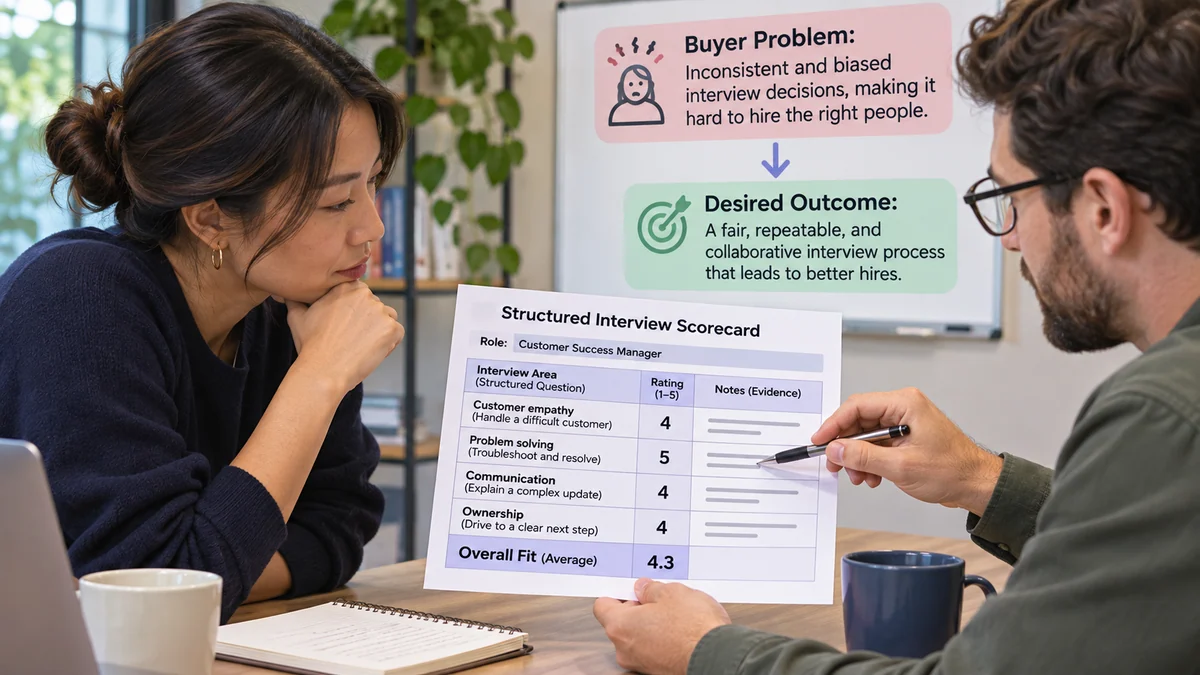
Build the scorecard around work the hire must do
Start with the outcomes the person will own, turn them into job-related questions, and write down what answers would count as evidence. Give every candidate the same core questions and have interviewers record their observations before discussing ratings. The scorecard should help you explain why somebody is ready for the role and what you still need to verify.
At Wayne Human Capital, I work with businesses on recruiting and hiring decisions. A Dallas owner hiring a first operations lead might have a clear sense of what they want and still describe it as finding somebody who takes charge. I would turn that into work the person will do, such as identifying which jobs are late, communicating changes, and deciding which issues need the owner’s attention.
Decide what success looks like in the actual role
Ask the hiring manager and someone who knows the job to list the most important responsibilities. For each one, describe what a satisfactory outcome looks like. If two interviewers use words like organized or dependable, ask what they would see the person do. A buyer who keeps a purchase record current and alerts a manager to shortages offers evidence you can ask about.
Separate what the candidate must already know from what the company plans to teach. Give each essential requirement a reason tied to the job. Avoid letting a preference become a requirement just because the last person had it. If the role is changing, write down the work it needs now. Our guide to weighing skills and culture in a small-company hire has questions for making those choices explicit.
Use a recent job problem to check your list. Ask what made it difficult, which decisions the new hire would own and what the current team could reasonably handle. You may discover that the role needs somebody to communicate changes clearly more than it needs somebody with a particular job title in their past.
Ask questions that let candidates show their work
For an operations lead, you could ask the candidate to describe a time they found two customers had been promised the same delivery window. Ask what they learned, who they contacted and how they followed up. If they have never managed that exact situation, an approved hypothetical question can give them a chance to explain how they would approach something similar. Use the same core question and comparable follow-up prompts with each candidate.
The Office of Personnel Management’s structured interview guide explains the use of questions tied to job competencies and a shared rating scale. You can use that approach in a small team without copying a federal hiring process. Start with a manageable number of criteria and pilot the questions. Give interviewers enough room to ask for clarification while keeping the main evidence comparable.
Listen for which actions the person took and what changed. Follow up on an answer that describes the team without showing the candidate’s part. Ask for enough detail to score the example.
Write examples for the ratings
A weak answer for the delivery example might give no specific way to resolve the conflict. An adequate answer might explain how the candidate checked commitments, chose a sequence and notified the customers. A strong answer might also explain how they documented the decision and prevented the same scheduling problem from returning. Match the examples to the actual level of the role.
Decide in advance how to handle missing evidence. Use a note such as insufficient evidence where an answer was too general or the topic was not covered. That tells you what to check next. If the role requires a specific qualification, record how you will verify it separately. Decide which criteria matter most before you meet candidates, and ask your employment adviser to review the process.
If you are hiring for a key role in Dallas–Fort Worth, bring the job description and a few recent examples of what good work looks like. I can help you build questions and ratings that the interviewers can apply to those responsibilities.
Give the interviewers instructions they can actually use
Tell each interviewer which questions they will ask, how much time they have and where to record the answer. Show them a sample rating and why it fits. Have them rate the same practice answer and explain the evidence they used. If people reach very different ratings, check whether the scale is vague or whether the job expectation itself is unclear.
Have the team take notes about what candidates say and do that relates to the work. Give them an appropriate place to keep the records and instructions for handling them. Decide how questions or accommodation requests will be handled with your human resources or employment adviser. The Equal Employment Opportunity Commission’s guidance on employment selection procedures explains why employers need to consider the relationship of their tools to the job and monitor how procedures are used.
Before an interview, tell candidates what the process involves and how long to plan for it. Let them know whom to contact about an accommodation. When the format is clear in advance, everyone can prepare for the same kind of conversation and the interviewers can focus on hearing the work examples they need.
Use the discussion to resolve differences in evidence
Ask each interviewer to complete the first score privately. In the discussion, start with differences that would affect the decision. Ask what the candidate actually said and which part of the scoring guide applies. If one person heard something others missed, check the notes. If a rating was based on how confident the candidate sounded, ask whether the answer contained the evidence the role needs.
Leave room to capture strengths the interview did not anticipate, provided they relate to the work. If an unexpected point changes how you want to assess the role, discuss how to apply any change consistently and get appropriate advice. Avoid adjusting weights after learning which candidate benefits. See our guide to questions to ask a recruiter before a key hire for ways to discuss how your hiring partner will collect and compare evidence.
Plan what the interview cannot establish
Some questions need another source of evidence. For a role that depends on clear written updates, an approved job-related exercise may tell you more than asking whether the candidate writes well. If references are appropriate, ask consistent questions related to the responsibilities. Get advice about your process and handle permissions, records and accommodations appropriately.
When you add a step, decide what it will show and how the information affects the final decision. Keep the candidate’s time in mind. A short and focused assessment can be more informative than another conversation that repeats the same questions. Ask what you would do with a conflicting result before deciding whether to include the step.
Decide who owns the final decision and what they need to see. If someone has a concern that has not been evaluated, identify the job requirement it relates to and what would establish whether it matters.
Use a small pilot to check the questions
Have someone familiar with the job answer the questions before you interview candidates. Notice where a question can be understood in more than one way. If it asks for several stories at once, break it into a main question and a follow-up. If the practice answer receives very different scores, make the rating examples more concrete before putting the scorecard into use.
Test the sequence as well. Give people time to think and follow up on examples. If you are trying to cover too many unrelated things, decide which ones can be evaluated in another step. Keep the question wording and criteria somewhere the interviewers can use during the conversation. A one-page form that they understand can be more useful than an extensive workbook they fill in afterward from memory.
Ask the person leading the search to review the instructions with a new interviewer before that person joins the panel. Use the same practice answer so everyone has a shared reference.
Use the scorecard after the person starts
The records can help a manager know what to reinforce during onboarding. If a new hire showed skill with customers and less experience with your scheduling system, give them help with the system and an early opportunity to use it. This guide to supporting a hire in their first 90 days offers questions for that part of the plan.
After the role has been filled, ask whether the questions produced useful examples and whether raters could apply the guide consistently. Check which responsibilities were difficult to assess or were missing entirely. Update the process before the next search. If a question produced the same vague answer from everyone, try changing what you ask for or where you verify the skill.
Bring a real task to the first planning conversation
If you want help building a scorecard, describe the opening, the people involved and one task the new hire needs to handle without the owner stepping in. Bring the current job description and any interview questions you have. We can talk through what evidence matters, what the team needs to assess it consistently, and which issues need to be checked elsewhere in the process.
Write the first version before scheduling interviews. Practice it with the people who will use it and revise anything that requires a guess. Once interviews start, keep a record of the questions, ratings and evidence so you can compare candidates on the work you hired them to do.
Questions people ask me
What should I score in an interview?
Score evidence relevant to the work the person needs to do. Use clear criteria, the same core questions, and a rating guide with examples.
How many questions should go on a scorecard?
Use enough questions to cover the role’s main responsibilities and leave room for relevant follow-up. Try the interview before you use it to see whether candidates can reasonably answer in the time available.
Should the team score together or independently?
Have each interviewer record evidence and a first rating independently. Then compare the evidence and discuss important differences.
Can a scorecard eliminate bias?
Structure can make a process easier to apply and review, but the questions, rating criteria and administration still need attention. Ask your employment adviser about selection practices and accommodation requirements.
Sources
Keep reading
More from Chase
- Writing a job posting that draws the right people and quietly turns away the wrong ones
- Core values that do real work: how to write them so you can hire and manage by them
- Promote from within or hire from outside? Choosing a manager for a growing company
- What happens in a team culture assessment, from the first call to the action plan
Running a business
- Business Consultant · Armando
- Business Broker · Michael
- Franchise Consultant · Avinash
- Information Technology · Anthony
- Computer Software · Brandon
- Business Phone & Telecom · Beau


