
Renovations/Remodeling · 7 min read
Can you stay in the house when your only kitchen is being remodeled?
Many households can stay for part of a kitchen remodel. Decide where the family can safely eat, wash up, and get in and out before demolition starts.

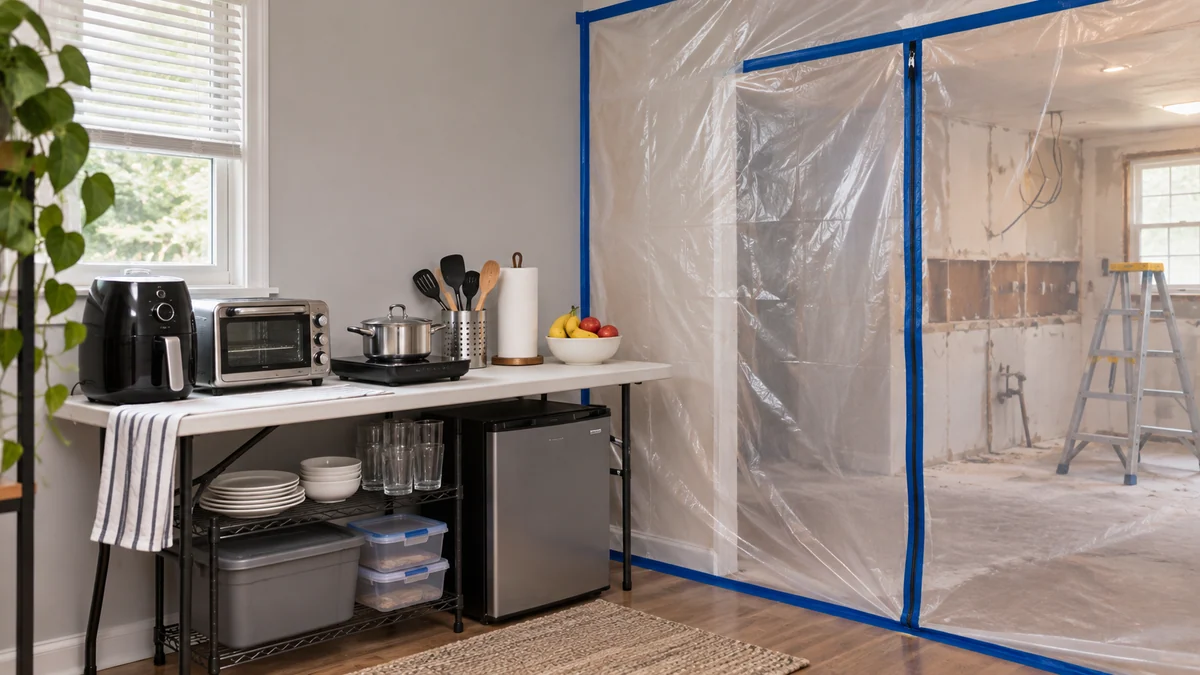
Decide based on the way the house will work
You may be able to stay home during a kitchen remodel if your family can safely use a separate part of the house, with a working bathroom, a place to handle meals, and a clear way in and out. I would ask your contractor to identify phases with utility interruptions, heavy disruption, or special containment needs. Some households can stay for most of the work and arrange to be elsewhere for specific days.
Think through an ordinary weekday first. Where will people get breakfast, wash their hands, and leave for school or work? If those routines all use the same door or hallway as demolition and material deliveries, work out another route with the contractor. The number of people using a space can matter more than the number of spare rooms.
A temporary setup is useful only if it fits the people living there. Discuss pets, work calls, sleep schedules, and any access or health needs early. If the work has to cut through the only workable path between the occupied rooms and the exit, a shorter stay elsewhere can make that phase easier to manage.
Draw the construction route and the family route
I would mark the work area and trace how debris, tools, cabinets, and appliances will get out or in. Then trace the path family members would use to get to the bedrooms, bathroom, and outside. Ask where temporary barriers will go and how the contractor keeps doors or passageways usable. You can usually see problems more quickly on a sketch than in a conversation about square footage.
Tell the contractor if a side or back entrance is normally locked, if a hallway is used by someone with limited mobility, or if you rely on a certain door after dark. Talk about where materials can be staged without blocking your route. Decide which spaces will be off limits and who will explain the setup to everyone in the house.
If the kitchen work includes structural changes, read our guide to removing a wall for an open kitchen. The work needed around that wall can determine where the contractor needs access and whether keeping an adjoining room in daily use is realistic.
Plan meals and cleanup as two separate jobs
Decide which refrigerator you will use, where food stays, and where you can safely wash dishes and hands. Use a clean room outside the work area and ask the contractor about available outlets before relying on appliances. Follow appliance instructions and use equipment suitable for indoor use. Keep the setup away from the temporary barriers and material routes.
I would plan a few meals that take little preparation and see what the household needs for an ordinary workday. If several people leave at different times, keep breakfast items and dishes easy to reach. Add the cost of prepared food or restaurant meals to the household budget if you expect to rely on them.
Give the kitchen items you still need a separate box before clearing the cabinets. Include whatever you use every day and make sure the box will be stored on the occupied side of the house. Everyday routines are easier when there is somewhere to put dishes and food at the end of the day.
Ask the contractor when water and power may be interrupted
The kitchen can be disconnected at different times for different trades. Ask which shutoffs affect the whole house, which affect only the kitchen, and what notice the team expects to give. Check whether the bathroom and any equipment you rely on will remain available during each phase. If a shutoff might extend past the expected time, ask whom you can contact for an update.
I would discuss milestones in writing before work begins. Ask when the old sink and appliances come out, when rough work is expected, and when you can use the new sink and cooking equipment. Use ranges until the team can confirm a date and keep a fallback for interruptions that move.
At Spire Construction, we work on kitchen remodels in the Richardson and Dallas area. If you want to discuss staying home, tell us what needs to remain available. We can look at the layout and talk through the phases where your household might need a different plan.
Talk through dust and lead-safe requirements before demolition
The Environmental Protection Agency recommends controlling dust and isolating the work area during remodeling. Ask your contractor what containment is appropriate, how it will be maintained, and what parts of the house the workers will use. Discuss how the home's heating and cooling system is affected and when the area can be reopened. Keep people and pets outside the work zone.
If your home was built before 1978, the EPA has separate guidance for renovations that may disturb lead-based paint. Ask the contractor how they will determine whether the requirements apply and which qualified firm will perform the work. Standard remodeling dust precautions should not be treated as a substitute for required lead-safe practices.
Leaving for a night does not settle how the work site is managed or cleaned. Ask when the contractor expects the area to be available again and what has to happen first. This is an especially important conversation if a household member has health concerns or uses the only nearby room for work or sleep.
Consider moving out only for the hard phases
Some families can use the other rooms while cabinets are installed but find demolition or utility work too disruptive. Others may need to be away for more of the project if the home has an open plan or there is nowhere suitable to handle meals. I would compare the work schedule with your household's hardest days before booking a longer stay.
Think through how you could leave if a planned phase moves. A room with a flexible reservation or a relative who knows the approximate window can be more practical than a tightly scheduled stay. If pets will be elsewhere, include how they will get there and who can pick them up.
Our guide to the stages of a room addition explains why different trades and inspections have to happen in sequence. A kitchen remodel is a different scope, but it can have similar handoffs. Ask the remodeler which dates depend on material, inspection, or trade availability.
Ask what staying home changes in the estimate
A contractor may need to protect an occupied hallway, stage the work in a different order, or restore a route at the end of each day. Ask which of those measures are included and how they affect the proposed timeline. If a bid assumes the home will be vacant, check what would change if you remain there.
Keep household expenses visible too. Include meals, pet care, transport, or occasional lodging if you expect to use them. Compare that with a short period away if it lets the contractor complete a particularly disruptive phase more efficiently. The choice depends on the actual layout and work.
Read our guide to comparing remodel bids if each company has made different assumptions about protection, access, or the length of the job. Ask for the missing details before judging a low number.
Decide what counts as having the kitchen back
During a remodel, cabinets can look finished while the sink is still disconnected or the cooking equipment is waiting on a trade. Ask the contractor when the items you rely on can actually be used. Walk through the work together before moving household items back in and ask about any remaining visit that affects access.
Keep the temporary kitchen available until you know you have a working replacement. Check cleanup and confirm when any barriers will come down. If the crew still needs room for a final adjustment, agree on where your belongings should go so the first day back does not interrupt that work.
Set a daily check-in that works for your household
Ask who will tell you when a delivery, inspection, or noisy task moves. Decide whether a text or a call is best and when you expect to hear about the following day's work. If someone in your household works nights or takes calls from home, tell the contractor what windows are most important before the schedule is set.
Use the check-in to confirm which door the crew will use and whether your usual path will be available that evening. If the household has to clear belongings or move a car for a delivery, ask for enough warning to do it. A regular exchange is more practical than asking different trades to interpret the household's plans as they arrive.
What I need to know when we first talk
Send a wide photo of the kitchen and a simple sketch showing the rooms and doors next to it. Tell me where you could set up for meals, whether your family needs a particular bathroom or entrance, and what times are hardest for noise or access. If the house is in the Dallas area and has an older finish you are concerned about, include that in the discussion before agreeing to demolition.
I would walk the space and discuss which parts of the remodel can happen with the house occupied. Ask us what we expect during demolition, during service interruptions, and in the days before the kitchen goes back into use. You should have enough information to decide which phases fit your household and where to make other arrangements.
Questions people ask me
How long will I be without a sink during a kitchen remodel?
Ask the contractor to identify when it will be disconnected and what must happen before it is ready. Countertop, plumbing, and inspection timing can affect the answer, so get the estimate for your layout.
Can I keep the refrigerator in the kitchen during the work?
Ask whether it can remain powered and accessed without entering the work area. It may be more practical to move the refrigerator to an approved location outside the construction route.
Can my pets stay at home?
They need a secure area away from work and deliveries. If there is no suitable space or the pets cannot tolerate the disruption, arrange care for the busiest phases.
Should I ask about lead paint before kitchen demolition?
Yes, if the home may be old enough for lead-based paint. Ask how the contractor will check the applicable requirements and what qualified personnel and protective measures would be needed.
Sources
Keep reading
More from Elliot
- Tub or walk-in shower: when the conversion makes sense and what the work involves
- Turning the attic into a bonus room or bedroom: what the space needs before it qualifies
- Change orders and payment schedules on a Texas remodel: how to keep the price from growing
- What a bathroom remodel costs in Dallas, and the choices that move the number
Your home
- Roofing · Chris
- Gutters · Jordan
- Painter · Andrey
- Power Washing · Doug
- Foundation & Concrete · TJ
- Drywall Repair · John


