
Garage Doors · 7 min read
Rain under the garage door. Will a new bottom seal fix it?
Follow the water before buying a new seal. The pattern of the wet floor can help you separate a worn door part from water flowing toward the opening.

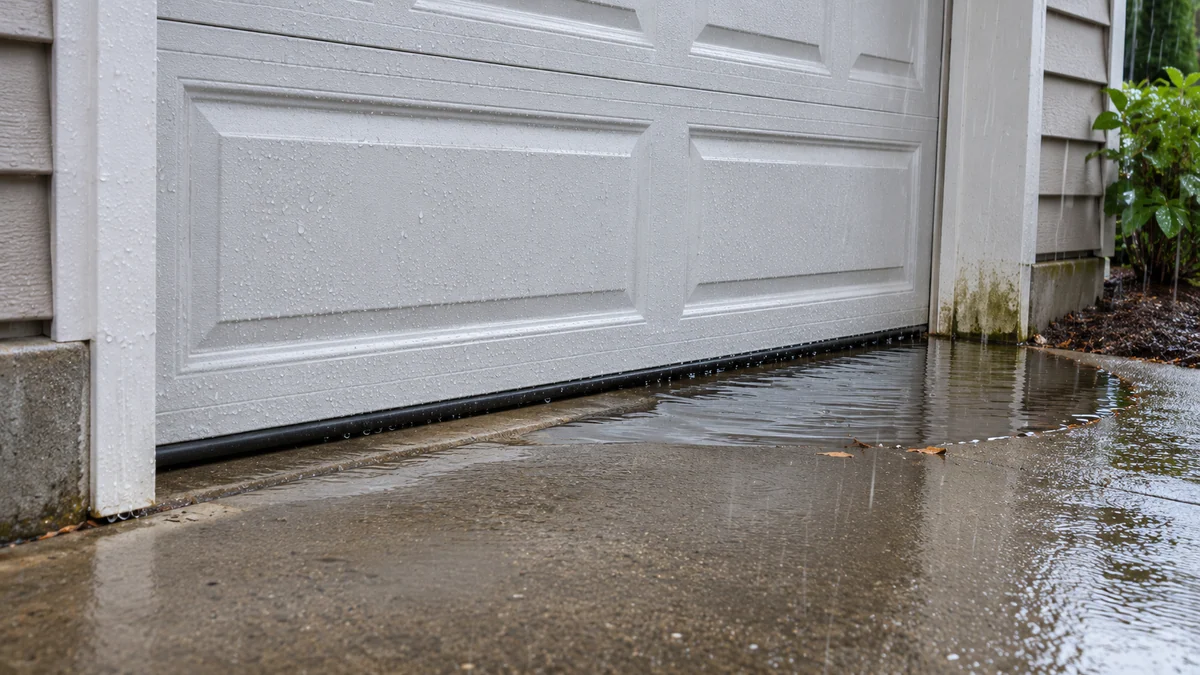
Follow the wet line before buying a seal
A new bottom seal can reduce rain entry if water is coming through a gap where an intact seal should meet the floor. If the driveway sends runoff toward the garage, the concrete dips, or wind pushes rain in around a side or between sections, the bottom seal addresses only part of the problem. I start by looking for where the floor gets wet first and checking whether the door sits evenly when it closes.
Say you open the door to leave for work and find a narrow wet line at one corner. That might be the point where the seal has pulled back, but it could also be the place where water running down the side of the door reaches the floor. If you only see the puddle after raising a wet door, look again after the next rain while the door is still closed. Water on the face can drip inside when the sections bend up into the track.
What the shape of the puddle can tell you
A wet line close to the door with the same shape as a gap underneath it gives me a place to look first. So does daylight that appears along one short section of the closed door. From a safe position on the floor, look for tears, missing pieces, or ends that have drawn back. Take a close photo with the door stationary. A wide photo that shows the wet line in relation to the wall and driveway is useful too.
If you see a fan-shaped wet area well inside the opening, check whether the driveway was holding standing water during the rain. A corner stain above the floor or water along the inside wall points me toward a different route. When the wet area is farther back or appears during dry weather, I would look for another source before ordering parts. The water may be following a slope in the concrete, and the spot where it gathers may be several feet from where it entered.
What actually touches the floor
The bottom seal is the flexible piece on the lowest door section. Its retainer is the channel that holds the seal on the door. Clopay publishes different instructions for bulb and U-shaped seals, an example of why a strip of the right length can still be wrong for the retainer. A replacement also needs room to flex without interfering with the movement of the door.
A technician can identify the retainer, see how it attaches, and decide whether it can stay in place. If the strip is brittle while the channel and bottom section are sound, the quote may be for the strip alone. A bent channel, a corroded section, or a seal that cannot reach a low spot in the concrete changes the discussion. If the door itself looks tilted or moves unevenly, my guide to garage door warning signs explains why I put those symptoms ahead of the weather seal.
When to have someone look at the door
If the door moves normally and the wet spot is small, you can keep stored items off the affected floor and collect photos during the next storm. Avoid cycling a door that binds, travels unevenly, or has a visibly loose part. Leave bottom brackets and spring or cable hardware to a garage door technician. A weather seal sits near hardware that can be under tension, so work that looks like removing a strip can turn into something very different once a fastener is in the way.
Around Dallas, send me a picture of the whole closed door, another along the bottom edge, and a description of when the floor gets wet. Tell me if the opener has been reversing or if you recently saw the door close crooked. That information helps us decide what to inspect first. My guide to garage door repairs you can safely assess yourself covers the difference between looking at a door and working on the parts that carry its weight.
The threshold and driveway are part of the picture
Look at the concrete from outside once the storm has passed. A driveway that pitches away from the opening gives water somewhere to go. A low spot near the door can hold water in contact with the seal, even when the seal fits the floor as designed. If a gutter pours above the opening or a downspout empties toward it, include that in your notes. Moving the flow away from the entrance can matter more than adding another layer of rubber.
The Door and Access Systems Manufacturers Association describes sectional doors as having limited resistance to water infiltration, particularly with wind-driven rain. A floor-mounted threshold and a compatible bottom seal may improve the meeting point where the door closes. If water regularly pools outside, ask where it will go after any raised threshold is installed. I would want an installer to look at the floor and drainage before adding a lip that could divert water into the door jamb or interfere with how people roll equipment in and out.
What I would put in the estimate
I would separate the observations from the work being proposed. A useful estimate identifies the part that is worn, how the new seal fits the existing retainer, and what the installer will check after the work. If the proposal includes a new retainer or bottom section, ask what makes the existing part unsuitable. Get the condition of the door recorded before you approve a wider replacement.
Labor depends on access, the length and type of the seal, and whether damaged parts or an older door design make the job more involved. A repair that takes care of a bent channel also has a different scope from work to improve the concrete apron. If someone suggests replacing the whole door, ask whether it is because of structural damage, parts availability, or the water problem alone. See my garage door repair cost guide for a breakdown of why two estimates for the same symptom can differ.
Check the work in dry weather and during the next storm
Before the technician leaves, ask to see the door close and check the meeting point with the floor. The seal should sit as intended for that model, and the door should move freely. Have the technician confirm that any required safety and operating checks are complete. If one part of the floor is unusually uneven, ask what contact you should expect there and have that limitation noted. A clear explanation makes the next rain easier to evaluate.
Afterward, write down what you see during the first ordinary rain and again during a storm blowing directly toward the door. The change matters. A narrow wet strip at one edge after a hard storm is different from standing water still entering from the driveway. If the new seal improved one spot and the same puddle shows up at another, look for the path across the floor and report what happened. A photo at the first sign of moisture tells me more than a picture after the whole area has dried.
Avoid paying for an adjustment that hides the gap
People sometimes ask if the opener can push the door down farther. If the problem is a missing seal or a low spot in the floor, extra closing pressure is the wrong thing to count on. The door and opener need to be set up according to the manufacturer's instructions so the door can close and respond correctly when it meets an obstruction. Ask the technician to explain why it stops at the height it does and whether anything in the travel needs repair before the seal can be judged.
Also ask how the weather seal will behave where the two bottom corners meet the side seals. A gap at a corner may stay open if one part ends short of another, even when the strip looks good across the middle. You can ask the technician to point out these joints on the closed door. If the floor changes height sharply at one corner, have them show you where a better seal can help and where the opening itself needs attention.
If you store cardboard boxes or use the garage as a work space, describe that to the technician. A repair that reduces occasional wind-driven drips can be acceptable for parking, while the same result may be a poor fit if you have supplies on the floor. Tell us what you need to protect so we can discuss the limits of the door and what water control the opening would still need.
What to send before you book a visit
If rain is getting into your garage in Dallas–Fort Worth, start with the two photos and the approximate location of the first wet spot. If you can read the door maker or model from a label without moving parts or climbing, include it. Mention any recent concrete work, door repairs, or changes to gutters and downspouts. Each gives us a clue about whether the opening or the surrounding drainage has changed.
At ProperShop Garage Door Service, we work on garage doors and their components. We can inspect how the door closes, check the condition of the lower section, and discuss which part of the problem a garage door repair can address. If the main issue is surface runoff, ask the door technician what they observed so you can give that information to whoever evaluates the drainage. A better estimate starts with knowing which trade needs to solve which part of the problem.
Questions people ask me
Will a bigger bottom seal stop every leak?
A larger seal may improve contact with a shallow floor irregularity if the retainer and door support it. It cannot redirect steady runoff, and a seal that is too large may interfere with normal closing.
Why does the garage floor get wet only after I open the door?
Rain can cling to the outside of a sectional door and drip as the sections move overhead. Compare that pattern with the floor when the door has stayed closed throughout the storm.
Should I replace the entire garage door if the seal is cracked?
A cracked seal can often be assessed as a separate part. Have a technician check the channel and bottom section before approving wider work.
Is the door seal the same as the driveway threshold?
The seal attaches to the bottom of the door. A floor threshold attaches to the surface under the door and changes the surface against which the seal closes.
Sources
Keep reading
More from Jim
- You backed into the garage door: is it safe to use, and what gets repaired
- Torsion or extension springs: how to tell which your garage door has, and when to upgrade
- The power is out and the car is in the garage: opening the door by hand, safely
- What garage door repair costs in Dallas, and the factors that move the price
Your home
- Roofing · Chris
- Gutters · Jordan
- Painter · Andrey
- Power Washing · Doug
- Foundation & Concrete · TJ
- Drywall Repair · John


