
Handyman · 7 min read
Cabinet hinge screws won’t hold. Can you save the door?
A loose cabinet door can come from the hinge or the material behind it. Check what moves before buying hardware or ordering a new door.

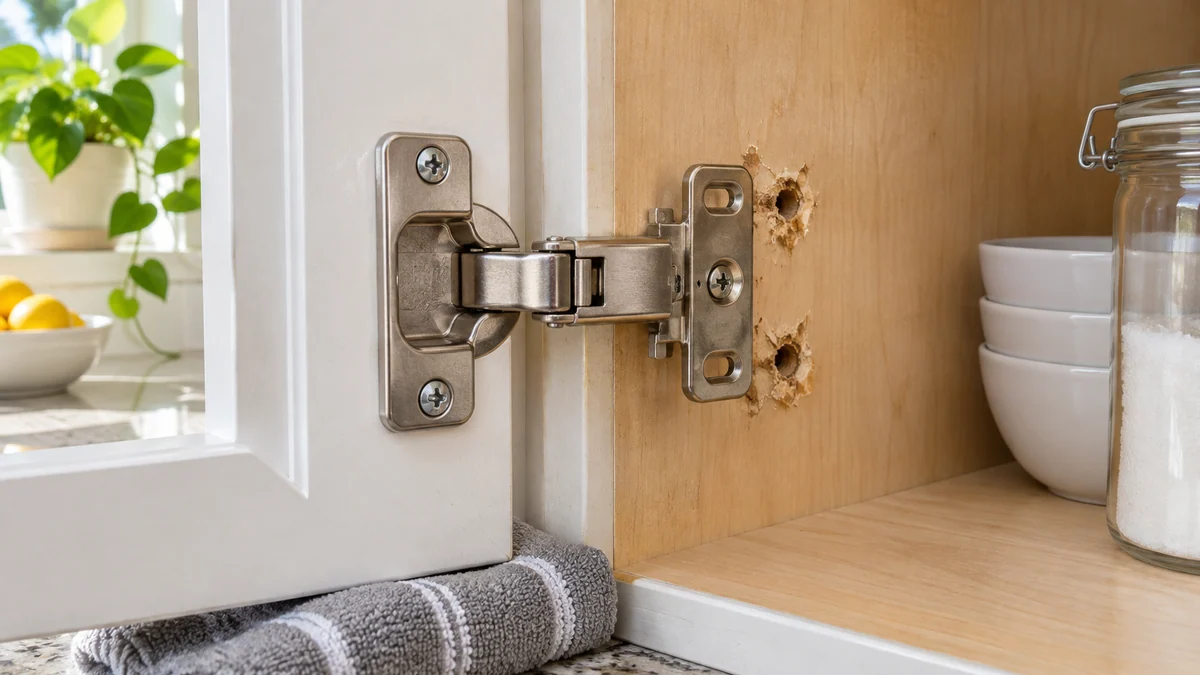
Find out whether the hinge or the cabinet panel moves
A handyman can often repair loose cabinet hinge screws when the damage is limited to the screw holes and there is sound material to hold compatible hardware or a repair plate. If the cabinet panel is swollen, split, or crumbling beyond the holes, the repair may need to address the panel or door instead. I look at which side of the hinge is moving before choosing a repair. A new door alone will leave the problem in place if the loose screws are on the cabinet side.
You may first notice that a door drops when you open it or that its edge catches the neighboring door. The hinge arm might still look straight. A mounting plate can shift with the weight of the door because the screws no longer grip. A door can also sit crooked while both mounting points are secure, which is a different problem. Try to identify the moving part before turning an adjustment screw or replacing a matching door you may have trouble finding again.
What a photo can tell us about the loose part
If the door is light, stable, and still well supported, open it only enough to see where the hardware joins the cabinet and the door. Take a wide photo showing how it sits beside the other doors. Then take a close view of the hinge and mounting screws. A concealed hinge commonly has a round cup seated in the back of the door and a plate attached on the cabinet side. A problem at either end can change how the door sits.
Look for a plate lifting away from the surface, a screw head sitting high, or loose flakes of board near the mounting holes. If you can see a manufacturer mark without disassembly, photograph it. Also take a picture of a sound hinge on the same cabinet run. The intact example helps show the expected hardware and how it sits when everything is attached. It can also help a handyman determine whether you have a matching part available before ordering anything.
If a hinge is barely attached or the door is heavy, keep the door closed if it can safely stay there and arrange for someone to support or remove it. Keep children away from the cabinet. An upper cabinet door can fall when the last attachment pulls out, and you do not need to keep opening it to prove that the hardware is loose.
Tell a loose attachment from a door that needs adjustment
An adjustment changes where the door sits while the mounting points remain secure. Blum's concealed hinge instructions describe separate attachment methods and adjustments for side, height, and depth on some models. The screws that move a door for alignment serve a different purpose from the fasteners that hold the plate to the cabinet. Identify your hardware before turning anything. A different hinge can use different fasteners or an adjustment that works another way.
When a plate shifts on the cabinet as the door moves, the attachment needs attention first. Turning an alignment screw may make the gap look better for a moment and leave the door weight on the same damaged holes. If the hinge itself bends, binds, or has a broken part, ask whether the mechanism needs to be replaced. My guide to what a sticking door can tell you uses the same principle of looking at the fit and movement before deciding what part needs work.
Check how far the damage extends
A worn screw hole can be a small area surrounded by material that still feels and looks intact. A larger break can leave the surface raised or the edge split. Look for a history of moisture, especially at a sink base or beside a dishwasher. If the cabinet material is visibly swollen or you can see ongoing moisture, find out where the water is coming from before deciding how much of the cabinet can stay. An anchor designed for an intact panel depends on that panel staying sound.
The door side matters too. If the round recess and nearby material are intact, the hinge cup might still be usable. If the recess has broken through toward an edge or the door has a split that continues beyond it, ask how a repair would be supported. The visible finish can hide what happened on the other side, so take photos of the front and back. Avoid buying a new door until you know whether the damaged attachment belongs to the door or the cabinet box.
When I would ask for a handyman’s assessment
For a kitchen hardware repair in Plano or Dallas–Fort Worth, send the photos and tell us which hinge first came loose, whether anyone has tried tightening it, and how many doors are affected. If the cabinet is near an appliance or plumbing, mention whether you saw any swelling or a leak. If the door is one of a matching set and the finish is hard to replace, say that at the start. The condition of the existing material is more useful to the first discussion than a description of the cabinet’s color.
The DFW Handyman handles small hardware and carpentry repairs. I would arrange an on-site look if the door is hard to support, the damage reaches an edge, or earlier repairs have already opened up the same holes. My questions to ask before hiring a handyman can help you compare what a repair visit includes. Ask the person quoting whether they can identify the part from photos or need to see it before giving you a final scope.
Compare inserts, a repair plate, and a part replacement
For a limited hole problem, the repair can involve a compatible insert and fastener that restore grip. Rockler publishes a dowel repair kit for certain European-style hinges, which is one example of a product made for a particular hardware setup. If a localized area has pulled out and there is enough sound material around it, a compatible repair plate can provide a larger attachment area. FastCap makes a repair plate kit for certain torn-out cabinet hinges. The product must fit the actual hinge and the side being repaired.
Ask how any added plate or hardware affects the door position. There needs to be room for the door to swing and close without catching another door, a pullout shelf, or trim. A hinge that looks similar on a store shelf can differ in how the door overlaps the opening or where it sits when closed. If the existing hinge is damaged, a handyman should identify a replacement that fits the cabinet and check it against the rest of the doors.
If the panel cannot hold an appropriate fastener or the damage reaches beyond the repair area, ask about replacing the affected door or cabinet part. In an older kitchen, matching the finish and hardware can take more time than the removal itself. Compare the cost of keeping the existing visible door with the cost of finding a matching replacement before agreeing to change several doors at once.
Avoid making a small hole harder to repair
Repeatedly tightening a screw that no longer grips can enlarge the damaged area. Installing a longer screw without knowing the panel thickness can damage the visible side of the cabinet or run into something behind it. If somebody has already tried a different screw, keep it and show it to the repair person. Tell them if any filler was applied or a hole was moved, so they can check what material is still available to support a repair.
Avoid ordering parts based on a close-up of the hinge arm alone. Photograph the attachment to the cabinet and to the door. If the part number is not visible, an intact cabinet nearby can still help establish the type of mounting plate and what the door is meant to do. Ask who is responsible if a part ordered for the repair turns out to be incompatible. A clear estimate describes what can be confirmed before the cabinet is taken apart.
Check the scope and the finished operation
Price depends on the number and size of doors, the extent of the damaged material, the hardware needed, and how accessible the mounting points are. Ask whether the estimate includes identifying parts, bringing the correct hardware, and adjusting the door after the repair. If several small jobs need attention in the kitchen, describe them together so you can find out how the visit would be priced. My guide to what affects handyman pricing explains what to compare when different quotes assume different work.
Once the door is back on, ask the repair person to show that it opens without rubbing, closes evenly beside the neighboring door, and stays secure at both hinge ends. Try it normally after the person says it is ready. If a hinge with a soft-close feature was replaced, ask whether the replacement is intended to operate the same way. Note any change you should watch for during the first few uses. Call if the plate moves again instead of adding more pressure to the same fastener.
Send the cabinet details before buying a replacement door
If you have a loose cabinet door in North Texas, send a wide photo, a close view of both attachment points, and an explanation of what changes when the door moves. Include the hardware label if you can see it and the condition of the cabinet around the plate. We can discuss whether the likely work is an adjustment, hardware replacement, or a repair to the material that holds it.
Ask the person doing the work to name the part they plan to keep and what will hold the repaired hinge. If the answer depends on seeing behind the plate, agree on how they will show you what they find and get your approval before changing the scope. That gives you a useful comparison with buying a new door, and it helps you avoid replacing the wrong part.
Questions people ask me
Why does the screw turn without tightening?
The material around the hole may no longer grip the screw. Check whether the plate moves and have the attachment evaluated before continuing to tighten it.
Will a repair plate work on any cabinet hinge?
A plate needs to fit the hinge, mounting side, and available space. It also needs solid material around the damaged area to support the new attachment.
Can I keep the door if the hinge pulled out of the cabinet side?
You may be able to keep it if the door and the hinge are still sound. The repair has to address what holds the plate on the cabinet side.
Does a crooked cabinet door always have stripped screws?
A secure hinge may only need alignment, and a worn mechanism can also affect the fit. Watch which parts move before deciding the screw holes are damaged.
Sources
Keep reading
More from Lindsay
- A rusted iron gate or railing: when welding and refinishing save it, and when it has to go
- Childproofing a house: what to anchor, latch and gate before a baby starts crawling
- Selling your house: the small repairs worth making before you list, and the ones to skip
- What a handyman costs in Dallas, and why flat-rate pricing changes the math
Your home
- Roofing · Chris
- Gutters · Jordan
- Painter · Andrey
- Power Washing · Doug
- Foundation & Concrete · TJ
- Drywall Repair · John

