
Drywall Repair · 7 min read
Moving recessed lights? Plan the ceiling patches before the electrician comes
A lighting plan tells you where the new lights go. A patch plan tells you which old openings can close and how much ceiling needs finishing.

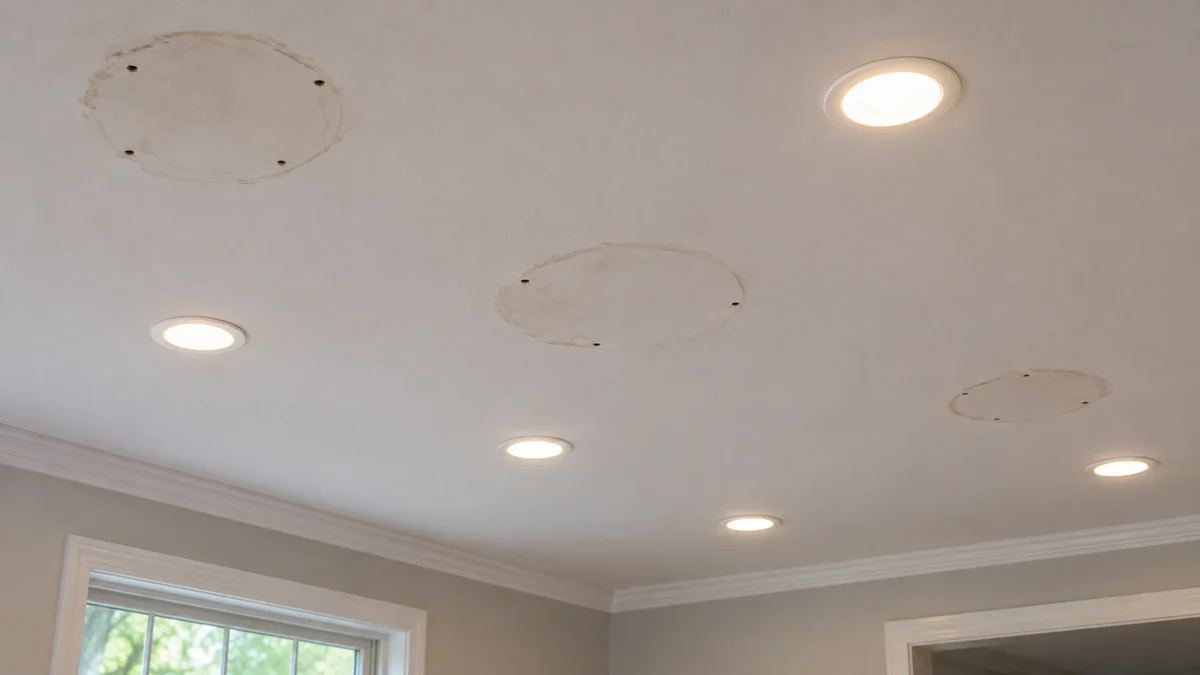
Close the old openings after the wiring work is ready
Plan to patch the ceiling after the electrician confirms which old openings can be closed and where access must stay available. Ask for a marked drawing or photo that distinguishes new fixture openings, old fixture holes, and extra cuts needed for access. Then ask the drywall contractor how those holes will be supported and finished under the new lighting. I would decide how much ceiling to paint at the same time, because strong light across the ceiling can make a local touch-up easier to see.
A light can move a few feet while the drywall work reaches farther. The electrician may need another opening to work around framing or reach the new location. That cut can end up in the part of the room where daylight travels across the ceiling. If you learn about it before the work starts, you can discuss the access with the electrician and give the drywall contractor a complete list. If you learn about it after painting, your choices will be more limited.
Mark each opening while the work is visible
Take a picture from the floor showing the whole ceiling. Sketch the room outline and mark existing lights, proposed lights, and any known extra openings. Put the names of the rooms on the pictures. In an open kitchen and living room, a photo by itself can make it hard to tell whether the circular cut is over the island or nearer the window. A sketch helps the repair crew find each location without guessing.
As the lighting work progresses, ask the electrician to identify any opening that needs to remain accessible. If you hear that a fixture has been moved, confirm whether that means its previous opening is ready to patch. Some details depend on what remains above the ceiling and what the electrical work requires. Ask the electrician to make that call. In Northeast Dallas, we can plan an estimate for the drywall once we understand the openings, and the electrician handles the wiring and fixtures.
Check the project plan again after the electrician opens the ceiling. If access changes, take another photo and update the marks before asking for a final price. Give the repair crew the latest version and keep the earlier photo if it shows the ceiling texture before any openings were cut. A clear image of that surface can help describe how broad the blend may need to be.
Check the edges before assuming the holes are simple
A clean circle in sound drywall gives me one kind of repair. A hole with a torn paper face, a broken edge, or another nearby cut may need a wider patch. The support above the board matters as well. We want a piece that sits flush and stays put through finishing. If an old fixture hole is right next to a new trim ring, I want to know how much ceiling surface we can work on without affecting the new opening.
Watch for sagging board, staining, or a ceiling finish you cannot identify. A sag or active leak needs its own assessment before drywall repair. The EPA advises getting an accredited asbestos professional involved if suspect material will be disturbed. If you are looking at an older ceiling and do not know what the texture contains, ask about the materials before anyone cuts or sands. Our guide to repairing a ceiling or wall after water damage explains what to ask when stains or moisture appear around an opening.
Pick a stopping point for the finish
When a repair is ready for texture, we compare it with a portion of the original ceiling that is easy to see. A light orange peel, knockdown pattern, and flat finish all call for different blending. Compare the area under daylight and with the new lights turned on if the electrician says that can be done safely. A narrow beam or a bright window can show an edge that you barely noticed before the light moved.
Paint has a separate scope. A technician may match the existing color and still see a difference in sheen or texture under side light. If the ceiling runs through several spaces without a break, ask which part the price includes and where the paint would stop. At a doorway or beam, there may be a natural place to end. If there is no break near the repair, compare the price of touch-up with the price of painting the continuous plane. My guide to texture and paint matching explains what to check before asking for an exact match.
Send the current pictures before asking for an estimate
For a drywall estimate, include a wide room photo and a close view of each area, taken from a safe position. Add the approximate ceiling height and the number of openings. Tell us which walls or ceiling surfaces meet the work, whether the fixtures are in place, and whether tall cabinets or an island restrict access. If you want painting included, say whether you have the paint and whether you want to consider the whole ceiling plane.
I would ask for a visit when the ceiling is tall, the opening falls near a new fixture, or the original surface is difficult to identify. It can also be useful if different contractors give conflicting descriptions of what needs to close. In Dallas–Fort Worth, our drywall team can assess the openings and talk through support, blending, and finishing. We need the electrician to confirm that the work above the repair is finished before we cover it.
Coordinate the two appointments around the same ceiling
Have the electrician identify when any fixture work and required checks will be finished. Give the drywall contractor the name of the person who can answer questions about the openings. Find out whether the electrician needs to return after the ceiling is finished. Some project sequences let the repair go ahead before the final fixture trim is in place, while others require the equipment to be protected during the patch. Confirm the sequence with the trades working on your project.
Plan for the room itself as well. Move fragile items and tell the repair crew what furniture must stay. Ask what they will protect, where they will set up, and how long you should expect the room to be affected. Joint compound, texture, primer, and paint can each need time before the next step. The number of openings alone does not tell you how the schedule will work. Our guide to drywall repair timing describes why drying and finish choices can change the visit.
Compare proposals by area and finish
Ask each contractor to write down how many holes are included and which ones need new drywall. A quote that covers patching and matching texture may leave paint to another person. A quote that includes painting may cover only the repaired area unless you ask how far it goes. If there are cuts close together, ask whether the estimate treats them as individual repairs or one area to blend. That can affect how the finished ceiling looks and what the crew needs to protect.
The main price factors are access, the size and condition of the openings, the level of finish, and the amount of ceiling included in the paint. A ceiling over a stairwell or kitchen island can take a different setup from the same patch on a low, open ceiling. Ask how the contractor will handle a larger damaged edge found on arrival. If more work is needed, get the change described before the crew goes ahead.
Look at the finished ceiling from where you use the room
When you walk through the work, look at the ceiling from the doorway, the place where you sit, and the spot below the new lights. Move across the room so you can see how the repair reads from different angles. If the repair has been primed or painted, ask when you should judge the final appearance under normal light. Fresh material and paint may look different while drying.
If you see a mark, point to it from the position where it is easiest to see. A shadow can come from the texture, a difference in surface level, or the way the paint catches light. Tell the contractor what you notice before assuming the problem is the color. Keep the paint information and a photo of the completed ceiling for later. If another lighting change happens, those details help the next contractor understand what was used.
What we need to finish your lighting project
If you have just moved lights, send the room photo, close views, the electrician's list of openings ready to close, and the finish you want. If the work is still being planned, send the fixture layout and say which parts are tentative. We can discuss the likely repair scope while the electrician is setting the final positions. Tell us when you use the room and whether you have a particular deadline so we can talk about the sequence before work starts.
Start with one question for each trade. Ask the electrician which openings can be permanently closed. Ask us what surface will be repaired and how far the texture or paint will extend. Get those answers on the same plan. If the lighting layout changes, update that plan before either contractor calls their part complete. That is the easiest way to avoid having a finished ceiling reopened or discovering that the last coat was never in the estimate.
Questions people ask me
Can drywall be patched before the new recessed lights go in?
That depends on what access the electrician still needs and the agreed fixture sequence. Ask the electrician to identify the openings that are ready to close before the drywall work is scheduled.
Will the old round opening show after repair?
The condition of the surrounding board, the original texture, and the lighting all affect the result. Review a realistic finish scope with the technician, especially if the ceiling gets strong side light.
Do I have to paint the entire ceiling?
A local touch-up can work in some rooms. If the color or sheen differs under the new lights, painting to a natural break can give a more even result.
Can one visit cover several old fixture holes?
Tell the drywall contractor how many openings there are and where they are. The repair materials, drying time, texture, and paint scope determine how the visits are planned.
Sources
Keep reading
More from John
- A sagging drywall ceiling: what causes it, when it is dangerous and how it gets fixed
- Nail pops, peeling tape and dented corners: what causes them and how they get fixed
- Drywall repair in a lived-in house: how much dust to expect and how to keep it contained
- Will insurance pay to fix the drywall after a leak? What Texas homeowners should know
Your home
- Roofing · Chris
- Gutters · Jordan
- Painter · Andrey
- Power Washing · Doug
- Foundation & Concrete · TJ
- Handyman · Lindsay


