
Leather Repair · 7 min read
Can a split seam on a leather recliner be stitched again?
A gap at a recliner seam can come from failed stitching or from leather pulling apart around it. The difference determines whether stitching the same seam is likely to hold.

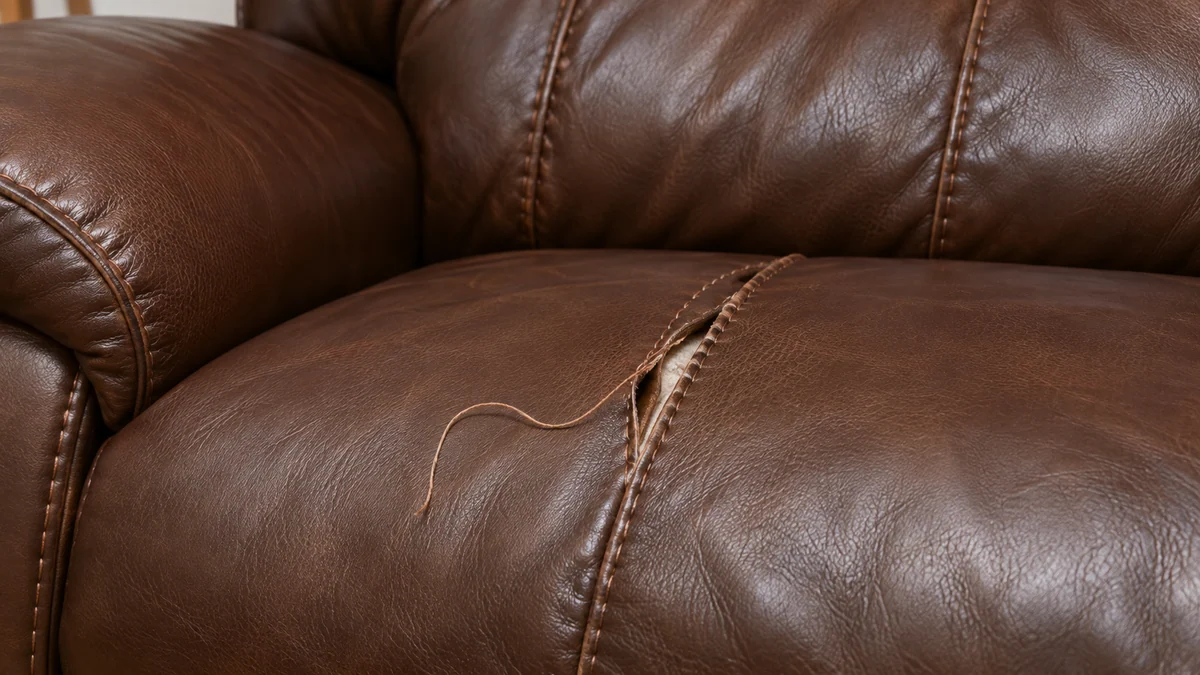
Find out what pulled apart
A split seam on a leather recliner may be restitched when the thread failed and both leather edges are still strong enough to hold it. If the original holes have stretched into tears, the leather is brittle, or the chair puts unusual pressure on the seam, I would look at other repair options. The first step is to distinguish broken thread from damaged leather and see why the seam opened.
The gap can look small when the chair is upright and grow when the seat takes weight or the footrest moves. You can tell me when it first showed up without testing it repeatedly. A repair has a better chance when we can see what remains of both sides of the seam before more of the edge tears.
I also ask whether the seat still feels and moves the way it used to. The cover is the part you can see, but a change in how the chair supports weight may matter. If you notice binding, wobbling, or a different sound, mention it when asking about the upholstery.
Look at the stitch line without widening the split
Use good light and take a photo of the gap with the chair empty. Look for loose thread and rows of holes that are still evenly shaped. Where the leather has pulled through, the holes may look stretched, ragged, or connected by a crack. Take a wider photo so the technician can see whether the damage is in the seat, the side, or the area that bends as the recliner moves.
A straight opening along an existing stitch line can still involve torn leather. The useful detail is whether both sides have enough sound material for a repair to hold. I would avoid tugging on the leather to find out. That can change what is available to work with and may make it harder to see where the split began.
Keep an eye on the surface beyond the seam. If several nearby areas show cracking, flaking, or peeling, include those in the photos. Our guide to assessing a cracked or faded leather sofa explains why the condition of the surrounding material can change the repair recommendation.
Check what the seam has to do every day
A seam on a decorative side panel may see different pressure than one under a person or next to a moving footrest. Show the location and tell me when the gap is most visible. If there is unusual tension when the chair moves, I would want to know whether the cover, the padding, or another part of the chair needs attention.
If a seam opened where the leather repeatedly folds, check how the material looks around that fold. A patch that seems flexible when the chair is still may look or feel different when the surface changes position. Ask the repairer what the area needs to do after the repair and which limits remain.
Share whether it is the main chair someone sits in each day or an occasional seat. That context helps the repairer talk about a practical outcome. Someone restoring a matching pair may be especially concerned about how a replacement panel looks next to the other chair.
When I would stop using the chair and ask for a closer look
If you hear a new sound, see the cover catching in a moving area, or feel the chair shift unexpectedly, stop using the reclining function and ask the manufacturer or a qualified repairer about the mechanism. A seam repair is a separate question. If the problem appears limited to the upholstery, avoiding pressure on the affected area can help preserve what remains for assessment.
I would leave loose threads and edges alone until the repairer sees them. Tell the technician if you already applied glue, conditioner, or another product. Loctite's own leather-repair guidance explains why a hard-setting adhesive can be a poor fit for a flexible surface. A gap on a stitched edge still needs a repair suited to the material and load.
For a recliner in the Dallas area, send a photo showing the whole chair and another one of the seam as it sits. If you can see a label without moving or opening anything, send a photo of that as well. We can discuss which details need to be checked in person.
What separates restitching, patching, and panel replacement
Restitching is worth considering when there is enough healthy leather on both sides and the seam is accessible. A repairer can explain which parts of the seam would be reused and whether some of the surrounding cover has to be moved for access. Ask how the repair addresses the reason it failed.
A small tear next to a seam is a different decision. It may be possible to reinforce the material in some locations, while a high-stress edge with little sound leather may call for replacing a panel. Sofology's guidance for its customers also distinguishes repairable loose stitching from cases in which part of the upholstery has to be replaced.
I would compare any plan with the overall condition and value of the chair to you. If multiple panels are peeling, you may want an opinion on the material before spending on one seam. If a chair is sound and the problem is concentrated at one edge, a local repair may be the practical choice.
Ask what the repair will look and feel like
The result can vary with the original thread, the color and grain of the cover, and whether the repaired area is in a place you touch. In an area with a noticeable decorative stitch, ask how the new thread and stitch line will compare with the old one. If a replacement panel is proposed, ask to see the best available material match.
Color can look different under direct sun and evening lamps. Send a photo in ordinary light if you want a preliminary opinion, and compare samples under the light you normally use. I would discuss any differences in sheen or texture before you decide how much work makes sense.
If the quote mentions color restoration beyond the seam, our guide to cleaning, recoloring, and repair can help you ask which treatment addresses which problem. A clean surrounding surface helps you evaluate appearance, while the seam still needs enough strength to work.
Understand what the estimate includes
The extent of the split, access to the back of the seam, the kind of leather, and the condition of nearby panels can affect labor and materials. Ask whether the estimate is for securing one seam, restoring the material next to it, or replacing a larger section. These are different amounts of work even when they begin with the same photo.
Check whether the chair is under a manufacturer or retailer warranty before authorizing a repair. Ask what they need to assess the claim and whether they can supply a matching cover. Our guide to leather repair cost factors explains other details to compare when you get estimates.
If a visit is proposed, describe stairs, narrow doorways, or anything else that affects access. For a power recliner, identify whether the cord and controls work normally without taking anything apart. Those facts can help separate an upholstery visit from a possible service call about the chair itself.
Look at the seam before you put the chair back into daily use
Once the repairer has checked the chair, ask what handling or care the specific repair needs. Look at the line in ordinary light and ask about any point where you can still see tension. If the technician identifies another part that should be checked before use, plan that separately.
I would note where the original seam failed and look there again after regular use. Tell the repairer if the material begins to stretch or another area opens. A change near the same spot is worth discussing while it is small.
Give the repairer enough information to identify the cover
Check any paperwork that came with the chair for the model, color name, and material description. Some chairs have different upholstery materials on the sitting surfaces and sides. If the paperwork names a cover but does not say where it was used, share a photo of the damaged panel and let the technician compare it with the rest of the chair.
I would also ask whether the chair has been refinished or repaired before. A prior repair may change the shape of an edge or cover the old stitch holes. Even if you do not know what was used, it helps to point out where that work took place.
If the recliner is part of a set, send a photo of the matching piece in the same light. The other chair gives us a reference for the original finish and helps us discuss how visible a material difference might be.
What to send me about your recliner
At Dallas Leather Reconditioning, I work on leather furniture and upholstery, including recliners and seams. To start, send the whole chair, the open seam, and the material immediately around it. Tell me whether the problem is getting wider and whether the chair moves normally.
I can then talk through whether it looks like loose stitching, torn edges, or a larger upholstery issue. If the photographs leave questions, an in-person assessment lets me check the condition of the leather before I suggest a specific repair. Tell me whether appearance, daily use, or preserving a matching chair matters most to you.
Questions people ask me
Can I close the gap with regular superglue?
A hard adhesive can create a rigid area on a surface that needs to move. Let the repairer see the seam and tell them about any product already applied.
How can I tell whether the leather itself tore?
Look at the stitch holes and the edge in good light without pulling it apart. Jagged edges, linked holes, or cracks running away from the seam are reasons to ask for an assessment.
Can one panel be replaced without reupholstering the whole recliner?
That may be an option when the rest of the cover is sound and the damaged panel can be accessed. Ask how closely the replacement can match the color, grain, and sheen.
What if the seam opens only when the footrest moves?
Mention where it opens and whether you notice changes in how the chair moves. A technician can assess the upholstery, and a mechanism issue may need separate attention.
Sources
Keep reading
More from Francisco
- Cracked and split vinyl boat seats: repair them dockside or replace them?
- Cat scratches and dog chew marks on a leather couch: what can be repaired, and how
- Changing the color of a leather sofa: what is possible, what lasts and when to skip it
- Why leather car seats crack in Texas heat, and how a worn driver's bolster gets fixed
Cars, travel and occasions
- Auto Body & Collision Repair · Manasa
- Fine Jewelry · Adam
- Florist · Jay
- Travel Agent · Dusty

