
Electrician · 7 min read
Does your detached garage have enough power for a workshop?
An existing garage outlet does not tell you how much power the building can support. Make an equipment list and have an electrician check the garage supply before buying more tools.
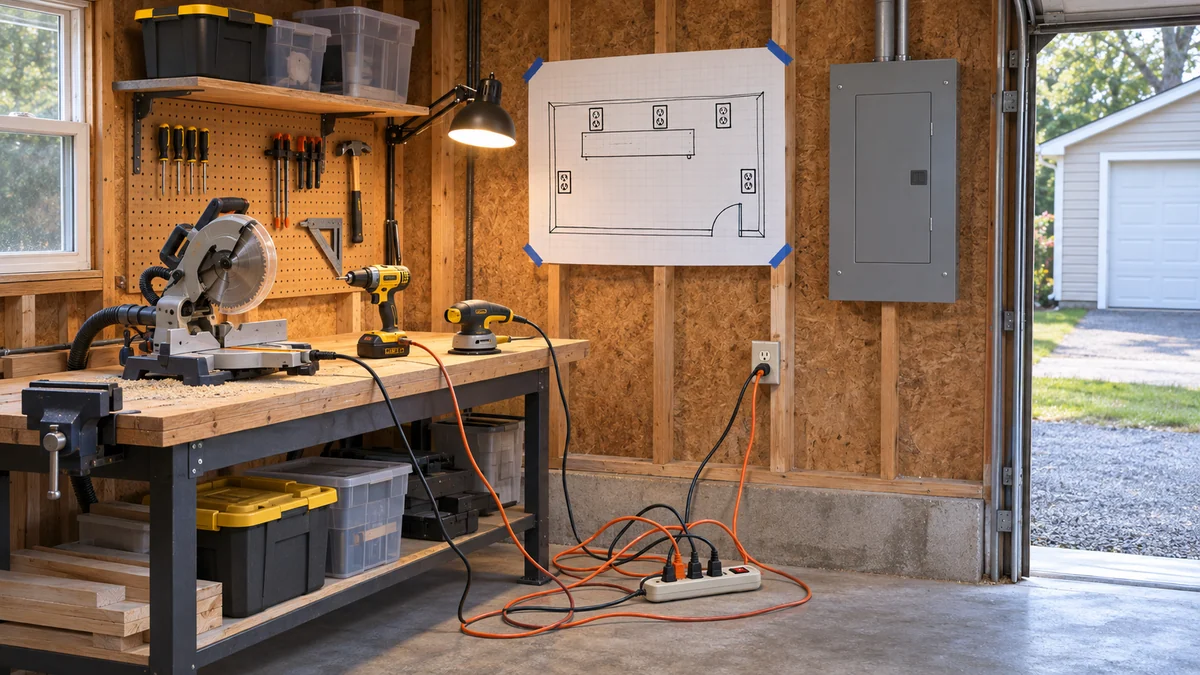
Start with the tools you want to use together
You may be able to run a workshop on the garage's existing supply, but the answer depends on the equipment, what runs together, and the condition and capacity of the existing wiring. I would have a licensed electrical contractor assess those details before buying equipment that needs a new circuit or planning an upgrade. A site visit can help distinguish a circuit addition, a new supply to the garage, and a larger change at the house.
A garage that was set up for lights and a door opener may now need to support a saw, dust collector, compressor, or heating equipment. Tell the electrician which tools run at the same time and whether anyone else uses the building while you work. The way you operate the shop is the starting point for the design.
For a detached building in the Dallas area, bring up the plan before adding walls, cabinets, or a finished ceiling. Where you intend to put equipment may affect the electrical route, and some parts of that route may be easier to reach before the finishes go in.
Photograph the equipment labels without taking anything apart
Make a list of equipment you own or are considering. Include the manufacturer, model, and electrical information on the label or installation manual. For a tool you have not purchased, send the manufacturer information instead of assuming a similar tool has the same requirements. Include lights, ventilation, a door opener, chargers, and other equipment that shares the space.
Describe a typical work session. You might run a saw and a dust collector together, then stop one while another tool starts. A compressor or climate system may start on its own while you are working. That information helps an electrician consider the actual combination instead of counting every tool as if it were used by itself.
Also mention whether the tools or workbench are likely to move. I would put a frequently used outlet where the cord reaches without crossing a normal path. A drawing with the tools and doors marked helps locate those paths.
Include anything you leave powered when you are out of the shop. A freezer or other appliance may use the garage supply even when all the tools are off. Give that information to the contractor so the shop can be assessed as part of the way the building already works.
Ask the electrician to check the supply from the house
Show the electrician where the garage is and where you think the house panel is. Tell us if an old project changed the garage wiring or if a previous owner added outlets. If you have documents for the installation, bring them. Leave covers closed and let a qualified person inspect the wiring and equipment. Share any inspection records you received with the property.
The electrician can evaluate whether the garage uses a single branch circuit, a supply feeding a separate panel, or another arrangement. The check should include the existing equipment, available capacity, and what additional load the system can support. An unused breaker space alone does not answer whether the electrical service has enough capacity.
If you have concerns about the house equipment too, our guide to signs an electrical panel needs review explains some questions to raise. Tell the contractor if breakers have been tripping or if the garage has already had problems under ordinary use.
Price the route to the garage and the work inside it
A quote can change with the distance between buildings, access to the route, and how wiring will be distributed inside the garage. Ask whether the contractor needs to investigate an existing pathway or plan a different one. If the route crosses paving or landscaping, ask what the proposal includes for access and restoration.
A circuit may serve one part of the plan while a new supply changes what the entire garage can support. Ask the contractor to describe the options against your actual equipment list. If a house service change is proposed, ask what the assessment showed and who would coordinate with the utility if needed.
At JET Electrical Contractors, we handle residential electrical installations. If you are planning a detached shop, send the equipment list and a sketch showing the garage in relation to the house. We can discuss which details need an on-site assessment before you choose a scope.
Design for workbenches and paths you actually use
Lay out the benches, large tools, storage, and doors. Consider where you stand and how material moves into and out of each tool. A useful electrical layout puts outlets and switches where you can use them without putting cords through doorways or across work paths. Ask about protection and placement appropriate to the garage and its use.
Think about lighting separately from how you power tools. If the general room light leaves a shadow over the bench, show the electrician where you need light to fall. If you expect to work with the garage door open, check how the door affects the space above the work area.
Leave room for repairs and changes to the equipment. A bench or cabinet may need to move later, so tell the electrician if that is likely. The best placement is usually one you can explain in terms of the work rather than a row of outlets spread at random.
Confirm permits before finishes or equipment orders
The Texas Department of Licensing and Regulation says non-exempt electrical work must be done by licensed people through a licensed electrical contractor. The City of Dallas publishes guidance for electrical permits and lists work such as new circuits and panel upgrades. Check the permitting office for your address and have the contractor explain who handles the required permit and inspection.
Ask what needs to be visible at inspection. If you plan to close walls or cover a route, coordinate that with the contractor before the work is concealed. If another contractor is building the garage or doing the finishes, give both teams the same schedule.
Our guide to choosing a licensed electrician in Texas offers questions you can use to compare contractors. For a garage in DeSoto or another nearby city, ask about the process there instead of assuming it matches the City of Dallas.
Address existing problems before adding a bigger load
If a breaker trips repeatedly, an outlet shows damage, or equipment behaves unusually, tell the electrician before using the garage for more demanding work. Avoid using an extension cord as a substitute for a properly planned permanent supply. Read the equipment instructions and ask the contractor which part of the existing setup needs to be checked.
Our guide to repeated breaker trips and flickering lights can help you describe what happens and when. Explain whether the issue appears in the garage only, whether a particular tool is in use, and whether something starts elsewhere at the same time.
If a proposed tool has a different connection than the ones you already use, keep the manufacturer's installation information handy. Let the electrician review what is required instead of assuming a different plug or adapter will make the existing supply suitable.
Agree on what the estimate leaves room for later
If you expect to add equipment in the future, say what it might be and how likely you are to buy it. Ask whether it makes sense to prepare for that change now and which parts could wait. The plan should account for a realistic next step without treating every possible tool as an immediate need.
When the work is complete, ask the contractor to identify the circuits, show you the equipment that was installed, and explain which documents or inspection records you should keep. Update your workshop sketch so you know where the supply and outlets are if you rearrange the space later.
Make it clear what the job includes outside the garage
If the contractor needs to work along the route between the buildings, ask what must be moved, who will arrange any necessary utility locates, and who handles repairs to finished surfaces afterward. Let the contractor know about landscape lighting, irrigation, or private work you know of. Share plans or photos from earlier projects if you have them.
Check how the work would affect access to the house and garage. Ask whether there will be a power interruption and whom you should speak with about equipment that needs to stay running. If the garage is where you park, discuss when the area will need to be cleared and when you can put the vehicle or stored items back.
When you compare proposals, ask about temporary access, restoration, and inspections alongside the work on the wiring itself. A written scope should identify which tasks are part of the job, which have been allowed for as an estimate, and which need another contractor. Those details help you see how much of the project each quote actually covers.
What to bring to a workshop electrical visit
Bring the equipment list, the manufacturer information for larger tools, and a sketch with the planned bench and storage locations. Include the route between the house and garage if you know it. Tell me what currently works and what problems have already come up.
I would use that information to look at the existing supply and discuss what the shop needs to do. Ask what the proposal assumes about your tools, how the garage will be powered, and which work it includes. You can then compare your choices before committing to wiring or equipment.
Questions people ask me
Does the workshop always need a separate electrical service?
The contractor needs to inspect the existing supply and evaluate your planned equipment. Depending on the findings, the options might include work on an existing supply, a new feed to the garage, or a larger change.
Can I tell how much capacity I have by looking for empty breaker spaces?
Empty spaces do not establish available electrical capacity. A qualified electrician can assess the existing system and the load you intend to add.
Should I buy my tools before getting an estimate?
You can share the model and manufacturer electrical specifications before purchase. That gives the electrician enough information to discuss what changes a particular tool may require.
Who decides whether I need an electrical permit?
Ask the permitting authority for the address and discuss the proposed work with the electrical contractor. Confirm who will handle the required permit and inspection before installation.
Sources
Keep reading
More from Jay
- A bigger breaker, a cheater plug, a warm outlet: electrical myths that put homes at risk
- Does that appliance need its own circuit? Signs a circuit is overloaded and what fixes it
- GFCI or AFCI: what each one does and where your house needs it
- What an electrician visit costs in DFW, and the things that actually set the price
Your home
- Roofing · Chris
- Gutters · Jordan
- Painter · Andrey
- Power Washing · Doug
- Foundation & Concrete · TJ
- Drywall Repair · John


