
Residential Mortgages · 7 min read
Comparing mortgage Loan Estimates when only one rate is locked
A locked quote and a floating quote can look close on paper and change by closing. Here is how I compare them on the same basis.

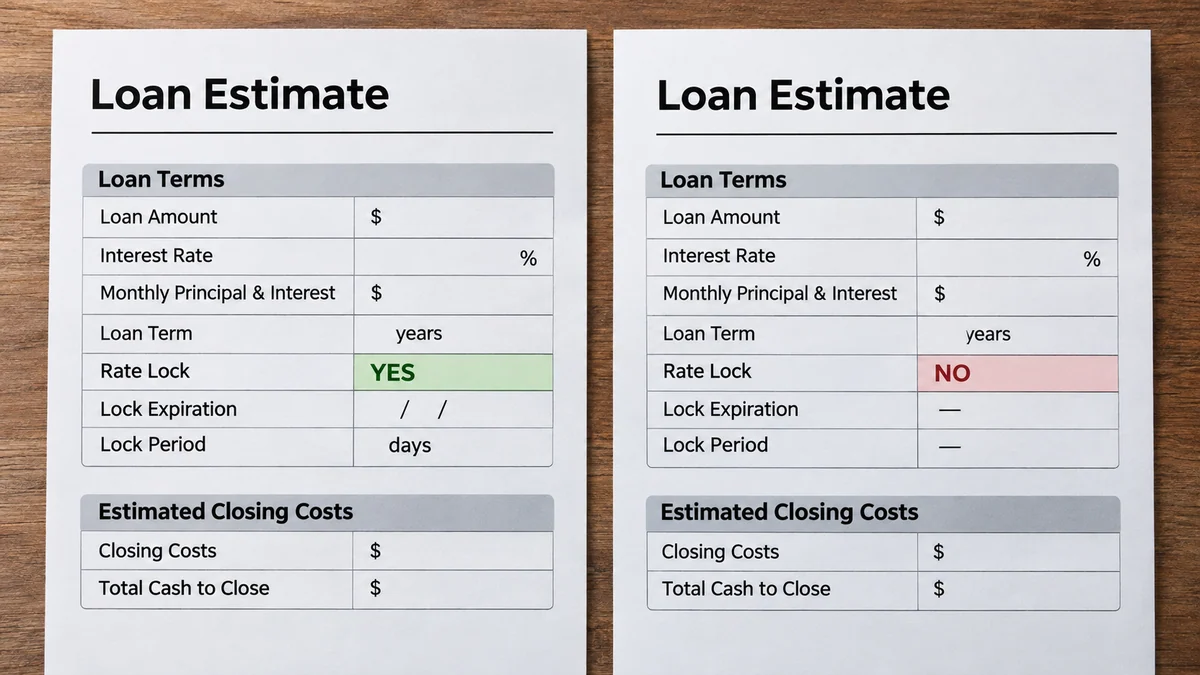
Get the two offers onto the same footing
If one mortgage Loan Estimate shows a locked rate and the other shows a floating rate, ask both lenders to quote the same loan terms with the same target closing date and a comparable lock period. Then compare the rate alongside points, lender credits, and the cash you would need to bring. A lower floating quote may look appealing, but it can change before you lock it. The written lock terms tell you what the lender has agreed to hold and for how long.
I’m Maria Leach, a residential mortgage lender. When a Dallas buyer brings me two estimates, I start by asking what each lender priced and when. A borrower who got one offer yesterday afternoon and a second this morning may be looking at different markets as well as different fees. A buyer who changed the down payment between calls may be comparing different loans. A good comparison makes those differences visible before you decide which offer works for your household.
Read the rate-lock box before comparing payments
Look near the top of the first page for the rate-lock status. If the rate is locked, note the expiration and ask which costs are covered by the lock. The Consumer Financial Protection Bureau explains that a lock typically protects the rate through the specified period when you close on time and the application stays consistent. It also notes that a lock policy can vary by lender. I ask for the terms in writing so the borrower can review the actual agreement.
If the estimate shows the rate is floating, ask for the current terms at which you could lock and the time by which you must accept them. Ask how the lender will confirm the lock after you request it. Save that confirmation with the estimate you used to decide. A salesperson saying a rate is available is different from a lender confirming it is locked on your specific application.
Write down the estimate issue date, the lock expiration if applicable, and your contracted closing date. Use the same time zone when comparing expirations. Keep those details with the estimates if the builder, seller, or title company changes the schedule.
You can ask a lender to identify the estimate they are using on a call. If someone reads a quote from their system that differs from your PDF, ask which terms you would be agreeing to and when you should expect written confirmation. This matters if two people in the household are talking to lenders separately. One shared record prevents a decision based on the rate alone when the points or lock window belonged to another option.
Match the loan before you compare the price
Verify the loan amount, term, program, down payment, and rate structure on both estimates. A fixed-rate loan and an adjustable-rate loan can have very different future payments even when the first payments are close. If you are comparing programs, write those differences down first. My guide to FHA, conventional and VA loans explains why choosing the loan program and comparing the lender’s pricing are separate decisions.
Make sure the property and occupancy assumptions also match. Tell both lenders if you plan to occupy the property or if it is a different kind of purchase. Ask how each lender estimated mortgage insurance, taxes, homeowner’s insurance, and any association charges. The payment box can look lower when some of the costs that you will pay every month are estimated differently.
I suggest putting the common assumptions on one sheet. Use separate lines for the price, loan amount, closing date, and type of loan. If a lender needs a different assumption to offer the quoted terms, leave that difference visible. It is part of what you are evaluating.
Separate rate pricing from the rest of the closing worksheet
Compare the rate with the lender’s origination charges, any discount points, and lender credits. A lower rate can come with points paid at closing. A credit can reduce how much you bring but may accompany a higher rate. If a lender offers multiple combinations, ask for the rate and price together for each option. My guide to what drives mortgage rates and costs gives more detail on the pricing behind those choices.
Next compare the other costs using the form categories. Some are third-party estimates, and prepaid or escrow amounts can differ because the assumptions differ. A smaller tax estimate can make cash to close look better without changing what the lender charges. Ask whether each estimate uses the same planned closing month, insurance estimate, and escrow assumptions. Confirm which amounts remain estimates and who will provide the final figures.
Review the source of funds alongside the quoted cash to close. A down payment or closing credit that depends on approval should stay visible in your notes. If a seller credit is part of the purchase, confirm both estimates reflect what your contract says before you judge which one requires less cash.
Ask what happens if the closing date moves
Take your expected closing date to each lender and ask what would happen if closing takes longer. Find out who requests an extension, what it could cost, and whether any timing conditions apply to your quote. A longer lock can give you more room if an appraisal, underwriting item, or builder schedule changes. Compare its cost with the shorter option before deciding how much timing risk you want to carry.
A rate lock can also be affected when information about the application changes. The CFPB gives examples including a change in the loan amount or a credit score change. If you are still choosing the property, adjusting the down payment, or documenting variable income, ask the lender what a change would do to this offer. I would put that question on the list before accepting a lock on a file with moving parts.
If you want help comparing timing in Dallas, bring the two estimates and the contract closing date to the conversation. My guide to mortgage closing steps explains the handoffs that can affect the calendar. You can ask the lender to show where your file stands and what must happen before the lock ends.
Price the amount you pay for a lower monthly bill
Once the loan assumptions and lock periods are comparable, ask for an option with and without points if both are available. Compare the additional money paid at closing with the reduction in the monthly principal and interest payment. You can divide the extra upfront cost by the monthly difference to get a rough sense of how long it takes to recover that cost. The result is a starting point. A change in plans, refinancing, or selling can alter the comparison.
I would also look at the cash you need after closing. One offer might leave less cash for moving, repairs, or an income interruption. The lower monthly payment might matter more if you expect to keep the loan for a long time and the added closing cost fits the rest of your budget. Write down which assumption is most important to you. That makes it easier to weigh the options even when a new quote arrives.
If you have questions about a specific credit or line item, ask what happens if the loan amount changes. A comparison makes the most sense when you know which figures are tied to this particular loan and which figures are estimates for the property.
Keep the written trail when you choose
Save the estimates, your comparison notes, and the lock confirmation together. If you receive a revised estimate, note what changed and ask for the reason. A new version may reflect a lock you just requested or new information about the property, so go back to the loan terms and the fees to see what moved. If you spoke by phone, ask the lender to confirm important terms in writing.
Before committing to the next step, ask what payments or agreements you are authorizing and when. If you are still shopping and one lender says the clock is running, ask for the specific expiration and the available alternatives. My questions to ask before applying for a mortgage can help you compare how each lender handles decisions and delays.
Include your own deadlines in the notes. If you need to decide by a financing deadline, coordinate with the people working on the purchase. That gives you time to ask about any item that is unclear and helps avoid relying on a quote that will have changed when you act.
What I need to compare two offers with you
Bring both estimates and note which rates were locked, the term of each lock, and your expected closing date. Tell me whether you are comparing the same loan type and down payment, and flag any credit or fee you do not recognize. Use a secure channel for documents with personal information. For an initial conversation, a summary of the terms can be enough to identify which questions still need answers.
I can help you lay out the rate, cash required, and timing in a way you can use. If a quote is missing a comparable lock or uses a different loan structure, I will explain what additional written information would let you compare it fairly. From there, you can decide what tradeoff fits your plans and confirm the actual terms with the lender you choose. If you are early in the process, my first-time buyer guide covers the documents and questions to organize before you are ready for a purchase contract.
Questions people ask me
Is the rate locked when I receive a Loan Estimate?
Check the rate-lock status on the first page. Some lenders issue an estimate before locking, so ask for written confirmation and the expiration if you request a lock.
Does a rate lock freeze every charge on the estimate?
Ask the lender which terms the lock protects. Other costs can change for reasons unrelated to the rate, and a change in loan details may affect the offer.
How do I compare different lock lengths?
Start by asking for the same lock period and loan terms. If both lenders cannot quote the same length, compare the cost and whether each option reaches your realistic closing date.
Is the lowest rate always the least expensive option?
Look at the points, credits, and other lender costs as well as the rate. Consider how long you expect to keep the loan and how much cash you want available after closing.
Sources
Keep reading
More from Maria
- Down payment assistance in Texas: how the programs work, who qualifies and what to ask
- Rolling renovation costs into your mortgage: how a HomeStyle Renovation loan works
- Pre-approved and under contract: what not to do before your mortgage closes
- Your mortgage payment went up and the rate did not change: escrow, taxes and what to do
Buying, selling and moving
- Residential Real Estate · Andy
- Title Services · Gail
- Moving Company · Mike
- Residential Property Management · Justin
- Commercial Real Estate · Julie


