
Travel Agent · 7 min read
How to plan a family trip when one traveler uses a wheelchair
A wheelchair-accessible room is one part of a workable trip. Confirm how the traveler gets from the plane to the hotel, into the bathroom, and out to the activities everyone came to share.

Start with the features the traveler needs
I would plan a family trip around the traveler's exact access needs, then confirm the flight, ground transfers, hotel room, and activities before buying arrangements you cannot change. Ask the traveler which details are essential and which they can work around. Verify how each stage connects to the next, because an accessible room is of little use if the only transfer from the airport cannot carry the traveler and their chair.
Different travelers need different things from the same property. Someone who can move from a wheelchair to a standard car seat may be able to use a car that carries a folded chair in the trunk. Someone who needs to remain seated in a wheelchair needs a different vehicle. I would have that conversation before asking a supplier if it can handle the trip.
A shared note can keep the requirements clear without circulating personal medical information. Include the device dimensions, any seating or transfer needs, and the practical details the traveler is comfortable sharing. Ask who should receive updates and who can make a decision if a supplier offers a substitute.
Confirm the whole flight with the operating airline
The U.S. Department of Transportation advises travelers to confirm accessibility needs with all airlines on the journey. If one airline sells the ticket and another operates a flight, I want to know who will provide help at each airport and whom the traveler should call. Share the mobility device details with the operating carrier and ask what it needs before travel.
Ask about the aircraft planned for each leg, including any questions about a powered chair's battery and whether the chair fits the available space. Ask how the chair is taken at departure and returned at arrival, and where the traveler should expect to meet staff. Keep the airline's instructions with the booking confirmation. If there is a connection, confirm who helps with that handoff.
For a family departing from DFW, I would compare a nonstop with the practical demands of a connection. A connection can introduce another transfer and more time without the chair. Compare flight options alongside ground transportation and the arrival time, so a convenient fare does not create a gap in the rest of the plan.
Ask the hotel to describe the actual room
Start with the traveler's everyday routine. Do they need a roll-in shower, an accessible route to the bed, space to move around it, or a particular toilet setup? Ask the hotel to confirm the features of the room type you would reserve. If bed height or clearance matters, ask staff to measure the relevant part instead of inferring it from a room category.
The U.S. Department of Justice's Title III regulations require covered places of lodging to provide enough information about accessible features for travelers to assess whether a room meets their needs. I use that as a reason to ask specific questions of the property. At an overseas hotel, ask the staff to describe the features plainly and use the measurements the traveler relies on.
A room can meet one person's needs and be unsuitable for another. Confirm the entrance and the route from reception, including elevators if needed. Ask about the rooms other family members will use and whether they can be nearby. If the room is part of a group booking, have the relevant access details attached to the actual reservation.
Match the transfer to the wheelchair and the party
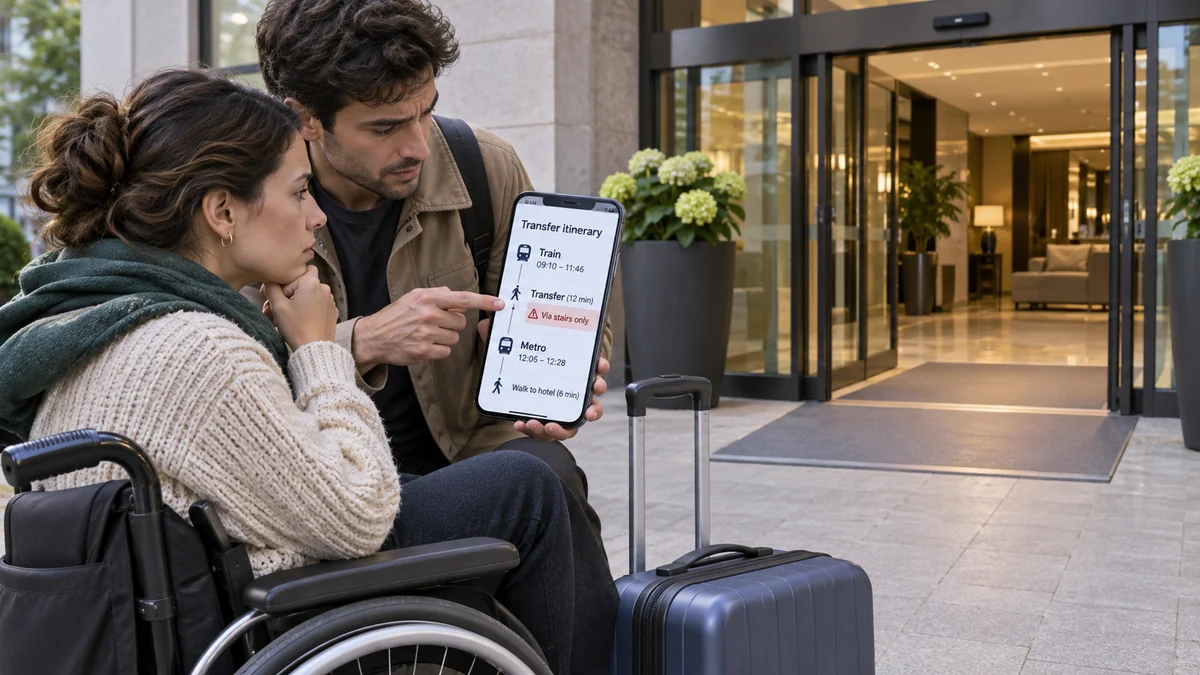
Ask the transport provider what vehicle would be dispatched and what loading method it uses. Give the dimensions and weight information requested, plus the number of passengers and amount of luggage. A vehicle can fit a wheelchair and still have too little space for the rest of the group. Compare one vehicle with sending some family members ahead if needed.
Tell the provider whether the traveler stays in their wheelchair in transit. Confirm securement, whether the vehicle can collect the traveler at the planned pickup point, and how a late flight changes the booking. If a different vehicle is sent, ask what process confirms that it can accommodate the same needs.
If you want help coordinating the trip, I can work through the itinerary details alongside hotels, transfers, and activities at RB Travel Collective. Bring the details about the chair and the trip's main events. It helps to identify which pieces need confirmation before a room or ticket is purchased.
Check the last stretch to every shared activity
A venue may have a step-free entrance while the most convenient arrival point has a curb or a steep route. Ask where the vehicle can stop and how the traveler gets from that point to the room, table, or tour. If the group wants to spend a full day out, include restrooms and places the traveler can take a break.
I like to check the trip's most important event first. If it is a family dinner, ask about seating and which entrance is open at that hour. If it is a tour, ask what part of the itinerary the traveler can join and how the guide handles a stop that is difficult to reach. Make sure the family can decide whether the experience fits before making a deposit.
The guide to planning a multigenerational milestone trip gives more ways to plan around a shared event and optional activities. I would include free time, so a traveler can rest or choose a shorter outing without giving up the main reason for the trip.
Get the important answers into the confirmation
Keep a simple note of who confirmed each detail, how to reach them, and the booking number it relates to. I would separate what a supplier confirmed from a request that is still pending. If you hear that a particular room or vehicle is only subject to availability, ask how and when that becomes definite.
Send the traveler a short version with the relevant arrangements and contact names. Ask them to review the specific features and tell you if something is missing. Staff who check a reservation on the day should be able to see the agreed information without the family having to explain everything again.
If a requirement is essential, check the cancellation terms before paying. Our guide to how far ahead to plan an international trip can help you think about which pieces to reserve early. I would give the pieces with the fewest suitable options the most time.
Decide how to handle a missed connection or substitution
Keep the phone numbers for the airline, hotel, and transfer provider where they can be reached during the trip. Agree on who calls the driver if the plane is delayed and who can ask the hotel about a late arrival. If you know of a second vehicle provider with suitable equipment, keep that information with the itinerary.
Ask the traveler what should happen if their device is delayed. The Department of Transportation suggests photographing mobility equipment before the flight and considering written handling instructions. Ask the airline about its process for reporting a problem and what assistance is available. A family member can help keep records while the traveler decides what they need.
The guide to travel plans changing mid-trip explains why supplier terms and insurance deserve separate attention. Ask a travel insurance professional about the policy if you are considering coverage. Check the terms before counting on reimbursement for a substitute room or vehicle.
Review the trip from the arrival time backward
A late arrival can change which staff are available, which hotel entrance is open, and whether the family can get a meal without another ride. Look at the schedule in local time and tell providers if the group arrives in stages. I would ask who answers if an after-hours check-in or pickup does not go as planned.
On the return trip, confirm the pickup location and allow time for the airline's requested check-in process. Keep some space in the schedule after major transitions. That gives the group time to use the services it arranged and reduces the chance that one delay means missing the activity everyone wanted.
Keep meals within reach on the first day
When a family arrives hungry, the nearest open restaurant often sets the plan. Check the route, entrance, seating, and restroom at one or two places close to the hotel. If you want to use the hotel restaurant, ask whether it is serving when you arrive and whether there is an accessible route from the booked room.
I would put at least one suitable choice in the itinerary without requiring the whole group to commit to dinner at a particular hour. If a flight delay is likely to affect the reservation, know how to reach the restaurant. A flexible meal plan can make the first evening more comfortable for everyone.
What to bring to a planning conversation
Tell me where the group wants to go, what matters most to the traveler using the wheelchair, and which dates or events are fixed. For a family starting in Dallas, include whether anyone is joining from a different airport. I can discuss hotels, transfers, and the order in which to confirm them.
Share whatever arrangements are already made and which can be changed. I would begin with the steps where there are few workable alternatives, then build the rest of the itinerary around those. Give the traveler the chance to review the answers directly so that the plan fits the way they want to travel.
Questions people ask me
Does an accessible hotel room always have a roll-in shower?
Accessible features vary by room type and location. Ask the hotel to describe the bathroom in the specific room category you are reserving and confirm any feature the traveler needs.
Should I book the airport transfer before the hotel?
I would check both before committing to a nonrefundable booking. A suitable room and a vehicle that can carry the traveler and chair need to be available for the same dates.
How do I confirm that a powered chair can go on a particular flight?
Contact the operating airline with the device dimensions, weight, and battery details it requests. If a flight or aircraft changes, ask the airline to confirm those arrangements again.
Can my family still do some activities separately?
Yes. Plan the important shared events around routes and facilities the traveler has confirmed, and leave optional time for family members to choose their own pace.
Sources
Keep reading
More from Dusty
- Planning a honeymoon abroad from Dallas: what to decide, what to book first, what to skip
- Private villa or resort for the family trip: how to tell which one your group needs
- Room blocks for a destination wedding: how they work and what to check before you sign
- When plans fall apart mid-trip: travel insurance, cancellations and who actually fixes it
Cars, travel and occasions
- Auto Body & Collision Repair · Manasa
- Leather Repair · Francisco
- Fine Jewelry · Adam
- Florist · Jay


