
Health Insurance · 7 min read
How to check if a doctor and hospital are in your new health plan
A doctor may accept a carrier and still be outside the network for the particular plan you are shopping. I check the full plan name and the exact location before comparing costs.

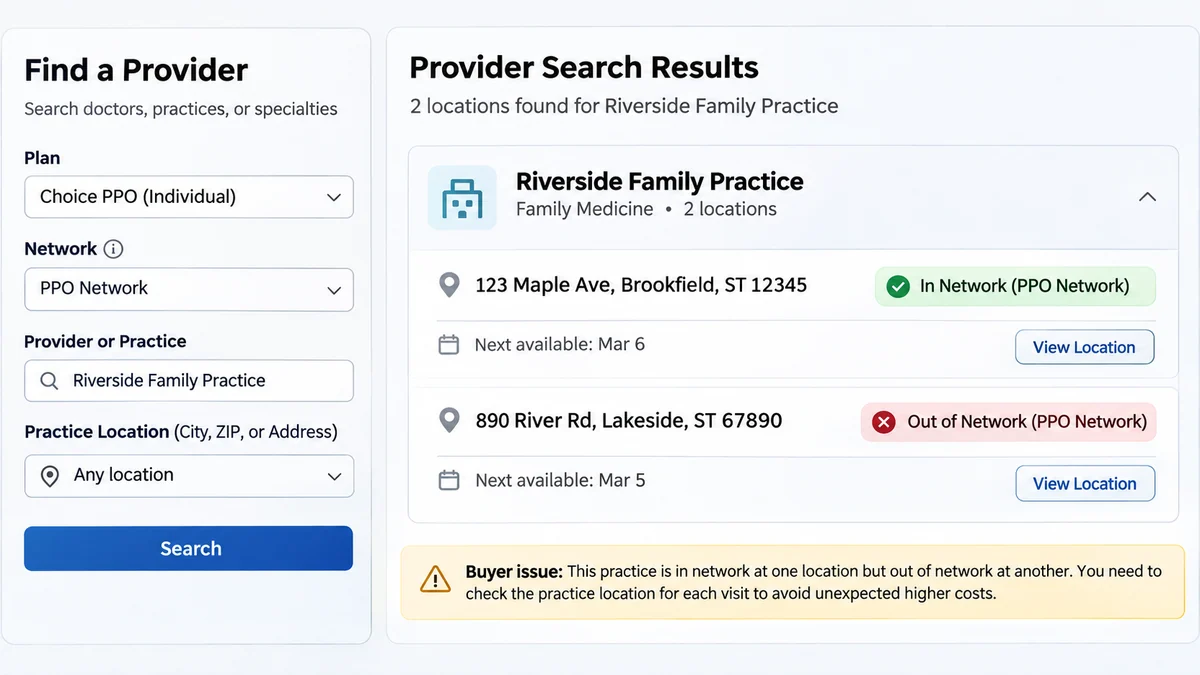
Check the exact plan with the insurer and the office
To verify your doctor or hospital before enrolling, search the insurer’s provider directory for the exact plan and network you are considering. Match the provider’s name and location, then confirm the result with the insurer and the provider’s billing office. A carrier can offer more than one network, and an office saying it accepts that carrier does not tell you which products it participates in. Write down the plan, provider, location, and date you checked.
I’m Rex Slover with Slover Agency. When I help someone in Dallas–Fort Worth compare health plans, I ask them to name the people and facilities they already use. The premium is easy to find. Whether their care can continue in the same place takes more work. I start with the providers who would be hardest for the person to replace or who are already involved in treatment.
Get enough information to identify the plan
Write down the carrier, full plan name, network name, and coverage start date. If you are comparing options through an employer or the Marketplace, use the identifier or enrollment materials associated with the exact option. Similar plan names can refer to different products or service areas. Ask which directory to use if there is more than one link or if the insurer asks whether you are looking at an employer, individual, or other plan.
HealthCare.gov describes different Marketplace network types and explains that some restrict provider choices more than others. Use the plan documents to check how your option treats out-of-network services, referrals, and other access rules. My guide to buying a plan on HealthCare.gov explains which parts of Marketplace shopping you can research before asking for help.
If the plan you are considering begins in a new coverage year, check that you are viewing the directory for that period. A search under your current plan can confirm your current coverage and still tell you little about the plan you might switch to.
Match the professional and the practice location
Search for the provider using the name as the office lists it. If the name is common or the office appears under a group practice, ask the office what name or provider identifier the insurer uses. Compare the practice address with the location you actually visit. Some physicians see patients in more than one office. A directory result at a different address is worth confirming before you rely on it.
Ask whether the provider is accepting new patients under the exact plan if you have never seen them. If you already have an appointment or a referral, explain that when you call. Check whether a specific primary care doctor has to be selected or whether you need a referral before the planned visit. Participation and appointment availability are different questions.
Check the hospitals separately. A hospital name can refer to a system with several campuses and outpatient locations. Search the facility you actually expect to use and note the address. If you use a clinic that recently moved or joined a larger group, ask the billing staff how the new location is listed in the plan directory.
Ask what happens when more than one provider bills
For a scheduled procedure, you may need to verify the facility, treating doctor, and other professionals or services involved. Ask the office for the billing entities it can identify and contact the insurer about the services you expect. A directory listing for the facility does not answer every coverage question. Ask whether the plan requires an authorization or a referral and who is expected to obtain it.
Make the same checks for an ongoing treatment such as therapy, lab work, or regular specialty appointments. Check where those services are performed, especially if the ordering provider sends you elsewhere. The plan’s coverage terms, cost-sharing, and requirements may be different for the service itself even when a doctor is listed in network.
If a visit is already scheduled around your coverage change, tell both offices the expected effective date. Ask which plan will apply on the date of service and what you can confirm before the appointment. Write down any item that still needs an answer.
Resolve conflicting answers before enrolling
Suppose the provider directory lists your doctor but the office tells you it does not accept the plan. Call the insurer using the number for that product, give the provider’s full name and address, and ask it to confirm the specific match. Ask the billing office to verify the plan using that same information. If the answers still differ, record what each person said and request written confirmation where possible. Treat the question as open until you can resolve it.
If you are comparing options in Dallas–Fort Worth and a provider matters to your decision, bring the full plan details and your short list of providers when you contact me. We can work through what you have checked and what still needs confirmation. My questions to ask a health insurance broker include what to expect from someone who helps compare coverage.
I would avoid assuming a plan works because a general search result shows the carrier’s logo. Ask the broker or insurer to show where the specific plan and location were verified. Keep the record with the material you use to enroll.
Compare the plans after you know what each one covers
Sort the providers you checked by what matters to you. A primary care practice you can change may be a different priority from a specialist who has been treating you for years. If an option would require changing providers, check whether you can find another professional who is in network, available, and accessible. Ask about appointment timing and any referral requirements before you rely on that alternative.
Then compare the full plan costs and access terms. A lower premium may be useful if you can receive care within that plan’s network. If you expect to see someone outside it, ask what the plan covers in that situation and how you would pay. Review the plan’s official materials and speak to a licensed insurance professional about the tradeoffs for your household.
My annual health plan review covers other details to revisit when a new enrollment period begins. Keep the network check with your notes about prescriptions, recurring care, and the cost of each option. That way you can see why an option looked workable when you made the decision.
Check every person who would use the policy
A family may use different doctors even when everyone shares one plan. Start a list for each person and mark which providers they see regularly. Include the practice that treats a child, the clinic a spouse uses after work, and the location you visit for follow-up care. Check the network against the exact plan for each one. One successful search does not establish that the rest of the family can keep their care.
If your household regularly uses care away from home, ask the insurer how the specific plan works in those locations. For example, a family member living elsewhere during the school year may need routine care near that address. Find out how the plan handles that situation and ask how urgent or emergency care differs from scheduled care. Get the answer from the policy or the insurer’s plan materials.
Ask which alternatives are available if the provider you want is outside the network. When the change would interrupt ongoing care, talk with the provider and plan before choosing an alternative so you know what needs to happen next.
Keep a record you can use after enrollment
Save the exact plan name, coverage period, provider location, directory result, and any confirmation you received. Note who you spoke with and when. If you find out later that the practice left the network or that a result referred to a different office, you have a clear record of the information you relied on. Ask the insurer how to report a directory problem or request help finding a provider.
Once you receive your member information, verify the plan is the one you selected and confirm your first appointment with the office. Let the billing staff know you changed plans if the carrier name stayed the same. If you need authorization or a referral, ask early enough for the provider to handle it before the appointment. The earlier directory check is a useful starting point for that conversation.
If you are switching from coverage through a job, my guide to health coverage after losing a job explains the separate decision about when coverage ends and which options may be available. Verify the effective date before arranging nonurgent care under a new plan.
What to bring when you want help choosing
Bring the exact plan names, the office locations you want to keep, and a list of facilities you expect to use. Add the dates of scheduled visits and note which providers have already confirmed participation. You can share the plan documents without giving me a detailed medical history on an initial call. Focus on the care relationships that would be most disruptive to change.
We can compare the plans for your needs and identify questions to confirm with the insurer and provider before enrollment. Ask which terms apply to your specific plan and which choices remain open. My guide to enrollment mistakes explains why checking provider access before choosing a premium is worth the extra call.
Before making the final decision, review the plan’s enrollment deadline and what you need to do to make coverage effective. Put your provider confirmation and plan materials together so you can find them when you check in for care.
Questions people ask me
Does my doctor accepting the insurer mean they are in my plan’s network?
Ask about the full plan and network, not just the carrier. Confirm the office location and verify participation with the insurer and the provider.
Can two offices for the same doctor be treated differently?
Check the location you actually use. If the directory only lists another address, ask both the insurer and office to confirm the one you need.
What if the insurer and doctor give different answers?
Give both the same exact plan and provider information and ask for a current confirmation. Keep the question open while you decide whether the plan fits.
Is every service in network if the hospital is in network?
Check the facility, professionals, and planned services with the insurer. Ask whether the care requires an authorization or referral and review the plan terms.
Sources
Keep reading
More from Rex
- PEO or your own group health plan: how a small business decides where to buy benefits
- Level-funded or fully insured: choosing how your company's health plan is funded
- How a health savings account works with a high-deductible plan, and who should use one
- You lost your job and your health plan with it: the options and deadlines, in order
Money, taxes and insurance
- Certified Public Accountant · Joe
- Bookkeeping · Monis
- Auditor · EJ
- Fractional CFO · Daniel
- Financial Advisor · Joe
- Commercial Banking · Leslie


