
HVAC - Heating & Air · 7 min read
There’s water in the pan under the indoor AC. Is that a service call?
An air conditioner makes condensation in normal use. Standing water in an overflow pan can tell you the drain system needs attention.

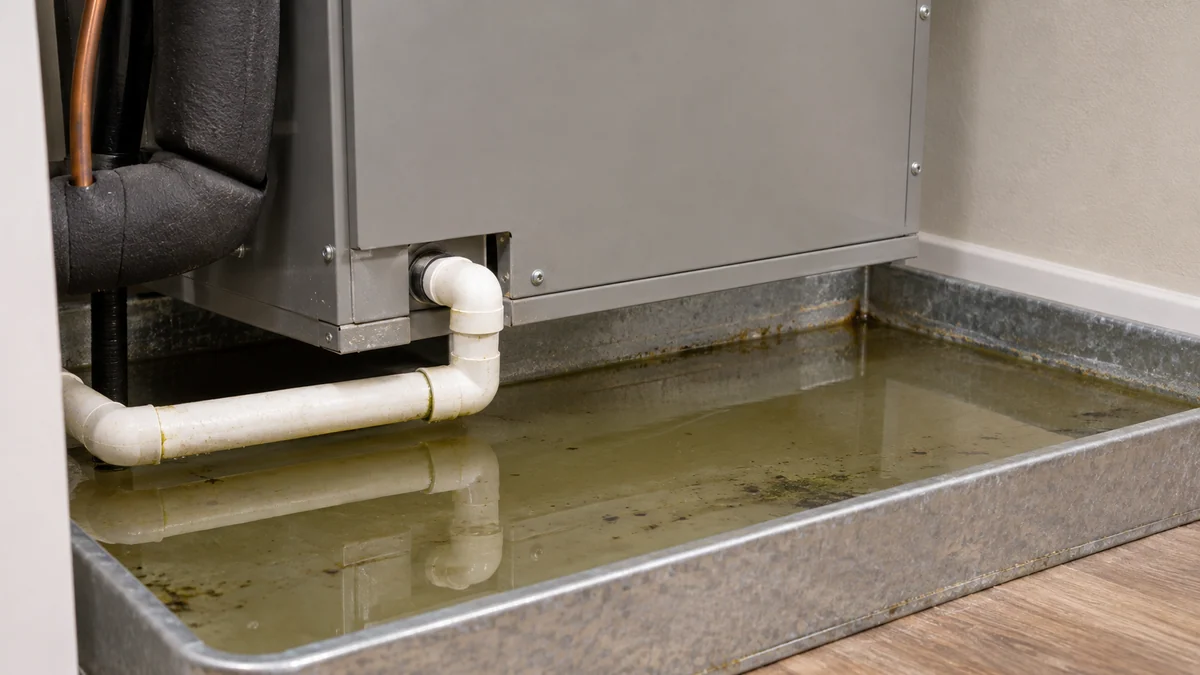
First find out which pan you can see
Cooling creates condensation at the indoor coil. The primary pan is meant to catch it and send it through a drain. If the separate pan underneath the indoor unit is holding water, or water is reaching the floor or ceiling, turn cooling off at the thermostat if you can do so safely and call for help. Keep away from wet electrical parts.
At Quigley Heating & Air, we repair and maintain equipment in the Dallas area. I would want to know whether the water is inside the equipment’s normal drain path, in the backup pan or already outside both. A wide photo from a dry, accessible spot can help us understand the layout. You can do that without opening the unit or climbing into a space you cannot safely reach.
What the two pans do
The primary drain path begins at the indoor evaporator coil. As moisture condenses, it falls to the internal pan and drains away. Some installations also have a separate pan under the equipment to catch water that escapes the usual path. A safety switch may stop operation if it detects rising water, depending on the design and installation. Ask the technician to explain what your equipment has.
The drains may end outdoors or connect to other approved plumbing arrangements. There can be more than one pipe near the equipment, and you may have a condensate pump. Seeing water at a particular pipe means little until you know what it serves. Ask which outlet normally carries condensate and which one, if any, indicates a problem when it drips.
If you are looking at a closet unit, you may see water at the bottom of the cabinet without seeing the primary pan. On an attic unit, the pan visible under the cabinet may be the secondary protection. Tell the service company what you can see and let them identify the parts.
What can cause an overflow
Carrier identifies a restricted condensate line, an iced coil or a damaged drain pan among common causes of water leaking from an air conditioner. A blocked line can keep the primary pan from emptying. Ice on a coil can create more water when it melts, and a crack can let water out before it reaches the drain. If your unit uses a pump, have the technician confirm it is moving water to the right outlet.
The timing helps. If the water appears while the equipment cools and the weather outside is dry, tell us. If it only shows up when it rains or when a fixture nearby is used, include that too. The source could be outside the AC. An older stain with a new wet edge is different from an old mark that has not changed. Make a note of when you first saw it and whether the system was running.
If cooling is weak, you hear an unusual sound or the system has stopped altogether, tell us that as well. Our guide to an air conditioner that runs without cooling can help you describe the cooling symptoms.
What to do while you wait for service
If water is actively leaking, stop using cooling where it is safe to change the thermostat setting. Stay out of wet electrical areas and keep others away from water near wiring or a light fixture. If you see a ceiling bulge or worsening water damage, avoid the area and arrange prompt help. Take photos from a safe position and make a note of which rooms or finishes are affected.
A small leak in an unfinished space may look manageable, but the installation can hide where the water is going. If moisture reached drywall or flooring, ask what needs to be assessed after the source is stopped. This guide to signs of hidden water damage explains what to point out to a restoration professional.
If you need an HVAC visit in North Dallas, tell us whether the system is above a finished room, how much water you can see and whether cooling is currently off. Tell us about any access constraints so we can discuss the next step.
What an HVAC technician should check
Ask the technician to identify the source of the water before proposing a fix. They can check the pan and drain route, see where water is failing to move, and look for the conditions that caused an overflow. If there is a pump or switch, ask how the equipment should respond when water rises and how they will verify that response. Keep the equipment off until the technician advises that it can safely run.
If the coil is iced, ask what the technician found about airflow and what other checks the system needs. If a drain is blocked, ask what material was removed and whether the drain position or connection needs attention. If the pan is leaking, have them show you the damage and explain how a new pan would fit the equipment and drain. Knowing the cause helps you decide whether a service visit is likely to address it.
Ask whether the technician can demonstrate normal drainage after the repair under appropriate conditions. Have them show you what you should see in an ordinary cycle and what would mean you should call again.
What to leave alone
Leave electrical panels and sealed equipment compartments to qualified service personnel. If you cannot identify the condensate line and its connections, avoid putting a cleaner into a pipe or taking it apart to see what comes out. Ask the technician to show you the specific maintenance steps allowed for your equipment before trying anything yourself. Our guide to HVAC maintenance you can safely do covers owner tasks you can discuss at the visit.
Water can disappear from view without the source being fixed. An emptied pan may collect water again during the next long cooling cycle. Avoid using an empty pan as the only test. Get an explanation of what led to the water and whether the system needs to remain off while another problem is evaluated.
When the thermostat goes blank or cooling cuts out
Some systems interrupt cooling when a float switch detects water. If you notice water and the air conditioner stops, tell the technician whether the thermostat went blank, still showed a request for cooling, or changed after you turned it off. Those observations can help them trace the interruption. Do not bypass a switch to test whether the air conditioner can run. A switch may be responding to the very condition you need to correct.
If a drain or switch has caused trouble before, say where the repair was made and whether the same part of the house got wet. If you still have the service notes, keep them with the photos. Similar symptoms can have different causes. The history gives the technician something to check and lets you ask whether a recurring condition needs a different fix.
Compare the estimate with the actual problem
A price to clear a drain may cover different work from a quote to replace a broken pan or resolve an airflow problem. Ask for the diagnosis and scope, and ask which additional work depends on what the technician finds. Access, equipment location and the condition of the drain can change the effort. A technician should be able to explain which work will make the unit drain properly and which concerns are separate.
If the estimate calls for a larger repair or replacement, ask what was found during the inspection and what options are available for the equipment you have. A single wet pan does not tell you the condition of the whole system. Ask about a way to confirm the cause before you make a bigger decision.
If water reached finished surfaces, keep the HVAC scope and the building repair scope clear. Ask who is checking each problem and what conditions need to be met before those areas are closed or painted.
Tell the technician if another trade worked nearby
Recent changes can be useful context. Tell us if insulation was added, a drain was rerouted, a filter was changed or someone moved equipment or stored items near the system. Explain when that happened relative to the first signs of water. There may be no connection, but it gives the technician a reason to look at parts that were recently disturbed.
Before the appointment, clear the usual access route only if you can do so safely. Point out the wet areas and the rooms below the equipment. If you cannot stay for the visit, arrange for someone with access who knows what happened to be there or available to answer questions.
Record what the system should look like afterward
Write down which pan or outlet the technician identified, whether there is a safety switch and what to check if the problem returns. Take a photo of the accessible parts they showed you. If it fits your equipment, ask how drainage is checked during a maintenance visit and whether your current schedule covers it. Our guide to what an HVAC maintenance plan should include gives you questions to bring to that conversation.
If you call us, describe where the water appeared, when it started and whether the system cooled normally before that. Note any recent filter change, work near the equipment or history of the same leak. We can use that information to discuss the visit and what the technician should look at first.
Questions people ask me
Is some water in an AC drain pan normal?
The indoor coil produces condensation while cooling, and the primary pan routes it into a drain. Standing water in a visible auxiliary pan is a reason to check the system, particularly if water is rising or leaking out.
Why is water still coming out after I turned off the air conditioner?
Water already in a pan or melting from an iced coil can keep moving after cooling stops. Tell the technician how long the water continued and where it appeared.
Does a full pan mean the air conditioner needs replacement?
A drain restriction, pan problem or another serviceable condition may be responsible. Have the technician determine the source and show you what they found before you discuss major replacement.
Can I just empty the pan and restart the AC?
An emptied pan does not tell you why water collected there. Leave the cooling off if you have an active leak or an overflow and arrange service before relying on it again.
Sources
Keep reading
More from Brandon
- The AC is running but the house feels clammy: what causes indoor humidity and how to fix it
- Ductless mini-split or more ductwork: cooling a garage conversion, addition or hot room
- Repair or replace the air conditioner? How to decide before the next Dallas summer
- What actually sets the price of a new AC or heating system in Dallas
Your home
- Roofing · Chris
- Gutters · Jordan
- Painter · Andrey
- Power Washing · Doug
- Foundation & Concrete · TJ
- Drywall Repair · John


